Feathers / Ticklers
Soft implements used for tickling or light sensation. Short Explanation: "Receiving" means you are tickled with feathers; "Giving" means you tickle your partner.
Give vs Receive
| Role | What it means for Feathers / Ticklers activity |
|---|---|
| Receiving | you are tickled with feathers |
| Giving | you tickle your partner |
Read the full Yes/No/Maybe list guide or browse all activities.
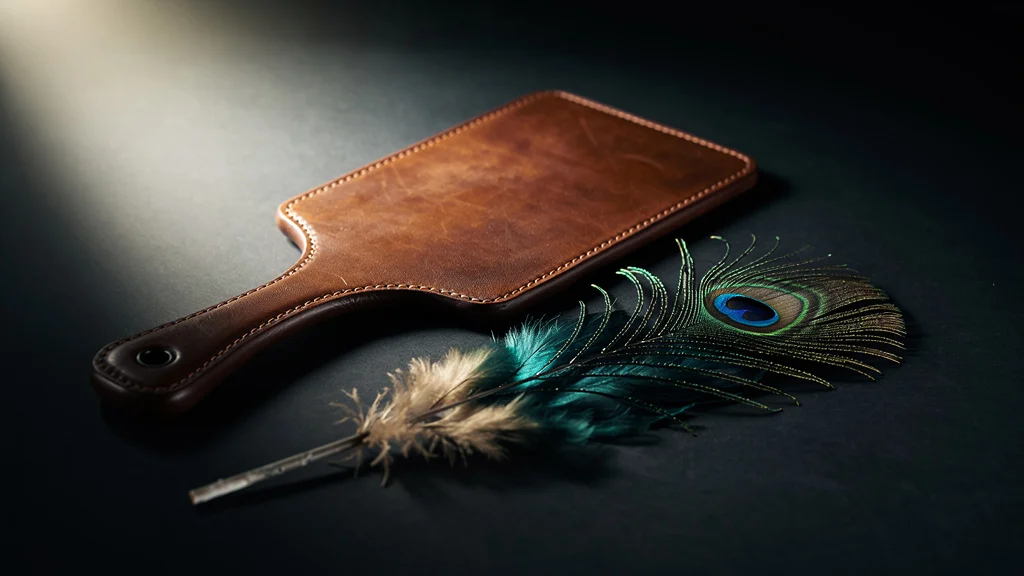
Interested in exploring Feathers / Ticklers with your partner?
Start Your ChecklistFeathers and ticklers represent one of the most accessible and gentle forms of sensation play, offering couples an entry point into the world of sensory exploration. These soft implements create delicate, teasing sensations across the skin that can range from soothing to intensely arousing depending on technique and context. Unlike more intense forms of sensation play, feathers and ticklers pose virtually no risk of injury while still delivering powerful experiences.
The appeal of feather play lies in its ability to heighten sensitivity and build anticipation. Light touches prime nerve endings, making subsequent sensations—whether more feather strokes or other forms of touch—feel more intense. Many couples use feathers as foreplay tools, while others incorporate them into longer scenes focusing purely on sensory exploration. The playful nature of tickling also brings laughter and lightness to intimate encounters.
This comprehensive guide covers the various types of feathers and ticklers available, techniques for maximizing their impact, ways to combine them with other activities, and practical tips for beginners. Whether you are looking to add gentle variety to your intimate life or build toward more intense sensation play, understanding feather and tickler techniques provides a valuable foundation.
How Feathers and Ticklers Work
Feathers and ticklers work by stimulating the fine nerve endings in the skin with minimal pressure. This light touch activates sensory receptors that respond to gentle stimulation, creating sensations that can range from relaxing to intensely arousing depending on location and technique.
Techniques and Variations
Effective feather play involves varying your approach to maintain interest and build sensation:
- Light trailing: Drawing the feather slowly across the skin in long, continuous strokes
- Circular motions: Moving the feather in small circles over sensitive areas
- Edge tracing: Following the outlines of body parts like the ears, nipples, or lips
- Flicking: Quick, light touches that create surprising sensations
- Patterns: Writing words or drawing shapes on the skin for the partner to guess
- Temperature contrast: Alternating feather touches with cool or warm implements
- Blindfolded exploration: Heightening anticipation by removing the sense of sight
Varying speed, pressure, and rhythm keeps the experience engaging. Long, slow strokes create a different effect than quick, teasing touches. Building patterns and then breaking them creates anticipation.
Equipment and Tools
A variety of feather and tickler options suit different preferences:
- Single feathers: Individual ostrich, peacock, or marabou feathers offering precise control
- Feather wands: Multiple feathers attached to a handle for broader coverage
- Feather dusters: Playful repurposing of household items for intimate use
- Tickler sticks: Rubber or silicone implements with soft tips designed for light sensation
- Fur mitts: Soft fur or faux fur gloves that allow hands-on sensory play
- Combination implements: Tools featuring both feathers and other elements like leather or rubber
- Wartenberg wheels: Pinwheel devices that provide more intense sensation for contrast
Quality matters for comfort and durability. Well-made feather implements feel softer and last longer than cheap alternatives.
Safety Considerations
Feather and tickler play is among the safest forms of sensation play, but a few considerations ensure consistently positive experiences.
Physical Safety
Physical risks are minimal with feathers and ticklers. Ensure implements are clean and free of sharp quills that could scratch. Avoid using feathers on broken skin, rashes, or sunburned areas. Some people have feather allergies, so check before extensive use on a new partner.
Be cautious around sensitive areas. While feathers are gentle, the face, eyes, and genitals still require careful attention. Lighter pressure works best for these areas.
If combining feathers with bondage, standard bondage safety applies. The tickling sensation can cause involuntary movement, so ensure restraints are not overly tight and the bound partner can communicate freely.
Emotional Safety
Tickling triggers involuntary responses that some people find distressing rather than pleasurable. Extended tickling can feel torturous to some individuals. Always establish that tickling is welcome and agree on limits.
The vulnerability of receiving sensation play, especially while blindfolded or restrained, may bring up unexpected emotions. Check in with your partner throughout and be prepared to shift approach if the experience becomes overwhelming.
Red Flags
Watch for these signs that the experience is not positive:
- Requests to stop that are ignored
- Distress that exceeds playful protest
- Physical discomfort signs like flinching from irritation rather than sensation
- Breathlessness from excessive laughter that becomes uncomfortable
- Partner disengaging or becoming nonresponsive
Beginners Guide to Feathers and Ticklers
Starting with feather and tickler play is simple and requires minimal investment or preparation.
Step 1: Acquire Basic Implements
A single quality feather or simple tickler is enough to begin. Ostrich feathers are popular for their softness and versatility. Many adult stores sell beginner kits that include feathers alongside other light sensation tools.
Step 2: Create the Right Atmosphere
Warm the room to a comfortable temperature since exposed skin will be receiving attention. Dim lighting and comfortable surfaces enhance relaxation. Consider soft music to set the mood.
Step 3: Start with Massage
Begin with hands-on touch before introducing implements. This helps your partner relax and establishes a sensual context. The transition from hands to feathers creates an interesting contrast.
Step 4: Explore Systematically
Move the feather across different body parts to discover which areas respond most pleasurably. Common sensitive zones include the neck, inner arms, sides of the torso, inner thighs, and feet, but individual responses vary significantly.
Step 5: Vary Your Technique
Alternate between long strokes and short touches, fast and slow movements, predictable patterns and surprising changes. This variety maintains interest and prevents sensation from becoming numbing.
Step 6: Consider Blindfolding
Removing sight significantly intensifies sensation by eliminating anticipation cues. If your partner is comfortable, a simple blindfold transforms feather play from pleasant to captivating.
Discussing with Your Partner
Introducing feather and tickler play is typically straightforward because of its gentle nature, but conversation still enhances the experience.
Frame it as exploration. Present feather play as an opportunity to discover new sensations together rather than introducing something complicated. The low-stakes nature makes it an easy yes for most partners.
Discuss ticklishness directly. Some people love being tickled while others find it genuinely distressing. Ask your partner about their relationship with tickling and respect their answer. Feather play can focus on sensuality rather than tickling if preferred.
Share what appeals to you. Whether it is the intimacy of focused attention, the anticipation that builds with light touch, or the playfulness of tickling, explaining your interest helps your partner understand and engage with the activity.
Suggest a trial. Propose a short exploration session where you use feathers on each other, taking turns giving and receiving. This mutual experience builds understanding and reveals preferences for both partners.
Connect it to bigger interests if applicable. If you are interested in sensation play more broadly, feathers can be positioned as a gentle starting point. If you simply want variety in foreplay, present it in that context. Match your framing to your actual goals.
Frequently Asked Questions
What is the best type of feather for sensation play?
Ostrich feathers are often considered ideal because of their exceptional softness and full plumes. Peacock feathers offer striking visual appeal with a slightly different texture. Marabou feathers are extremely soft but less dramatic. The best choice depends on personal preference for appearance and sensation. Try different types to find your favorite.
How do I care for feather implements?
Store feathers in a dry place away from crushing pressure. Gently shake out dust before use. Some feathers can be lightly steamed to restore fluffiness if they become compressed. Avoid getting them wet. Replace feathers that become broken, shabby, or develop sharp quill edges.
Can feather play be intense or is it always light?
While feathers produce gentle sensations, the experience can become intense through context. Combining feathers with restraints, blindfolds, and extended teasing builds anticipation that makes light touches feel powerful. Alternating feathers with more intense implements creates contrast that amplifies both sensations.
What areas of the body respond best to feathers?
Areas with thin skin and high nerve density typically respond most dramatically: the inner arms, neck, ears, nipples, inner thighs, behind the knees, and soles of the feet. However, individual sensitivity varies significantly. Explore your partner body to discover their unique response patterns.
How do feathers compare to other sensation play implements?
Feathers sit at the gentlest end of the sensation spectrum. They create teasing, titillating sensations without pain or intensity. This makes them ideal for warm-up, contrast with stronger implements, or as the primary focus for those who prefer gentle touch. More intense implements like pinwheels or floggers create very different experiences.
🛒 Recommended Gear
Note: Links below are affiliate links. We may earn a commission at no extra cost to you.
Discover What You Both Desire
Create your personal checklist and compare with your partner to find activities you'll both enjoy exploring together.
Get Started FreeNo credit card required