Paddles
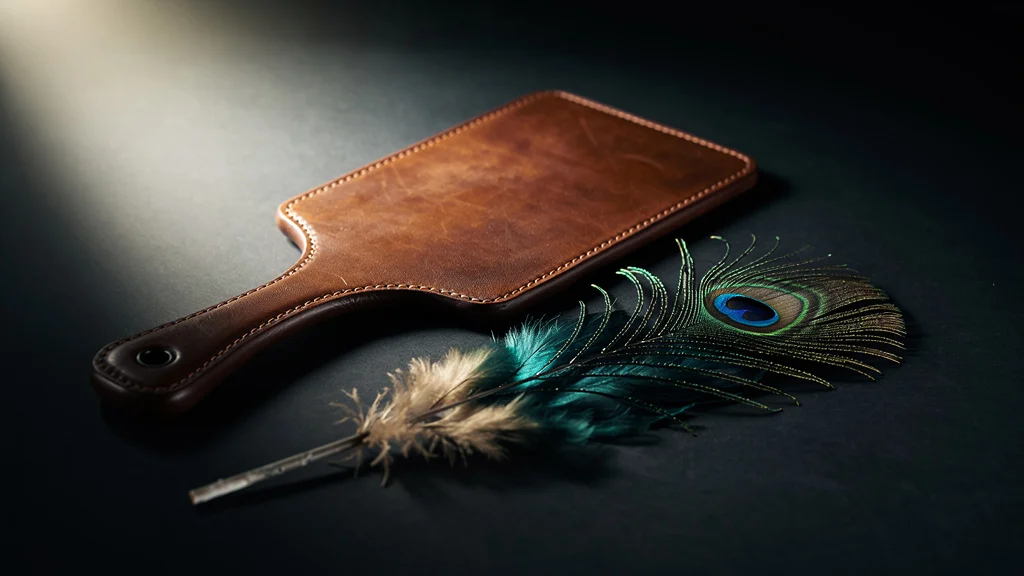
Flat paddles used for spanking, often made of wood or leather. Short Explanation: "Receiving" means you are spanked with a paddle; "Giving" means you use a paddle for spanking.
Give vs Receive
| Role | What it means for Paddles activity |
|---|---|
| Receiving | you are spanked with a paddle |
| Giving | you use a paddle for spanking |
Read the full Yes/No/Maybe list guide or browse all activities.
Interested in exploring Paddles with your partner?
Start Your ChecklistPaddles represent one of the most versatile and accessible tools in impact play, offering a satisfying blend of visual drama, distinctive sound, and controllable sensation. From the classic wooden paddle associated with traditional discipline to sleek leather designs and innovative materials, paddles deliver concentrated impact that can range from gentle warmup taps to intense, memorable strikes.
What distinguishes paddles from other impact implements is their broad, flat striking surface, which distributes force across a larger area than floggers or canes. This creates a different sensation profile - more thuddy and spread out rather than sharp and focused. For many recipients, paddles provide a uniquely satisfying experience: the anticipation of each stroke, the distinct sound upon impact, and the spreading warmth that follows.
This comprehensive guide explores the world of paddle play: understanding different paddle types and their characteristics, developing proper technique for safe and satisfying impact, caring for both the implement and your partner, and building scenes that maximize the erotic potential of this classic tool. Whether you are drawn to paddles for their traditional associations or simply appreciate their effectiveness, mastering this implement enriches any impact play practice.
How Paddle Play Works
Effective paddle use combines understanding of the implement, knowledge of safe target zones, proper technique, and attunement to your partner. These elements together create experiences that are both intense and sustainable.
Understanding Paddle Types
Wooden paddles range from lightweight balsa that delivers sting with minimal impact to heavy hardwoods that provide deep, thuddy sensation. Oak, maple, and bamboo are popular choices, each with distinct density and feel. Wooden paddle edges can be rounded or sharp, surface can be smooth or textured, and some feature drilled holes that reduce air resistance and increase sting.
Leather paddles offer more flexibility than wood, ranging from thin, snappy designs to thick, heavy implements that deliver serious thud. Layered leather creates different sensations than single pieces. Some leather paddles combine with padding for a gentler impact, while others remain rigid for more intensity. Leather conforms slightly to body contours, affecting how impact distributes.
Synthetic materials expand options further. Silicone paddles are easy to clean and provide unique flex characteristics. Lexan and acrylic create intense sting despite light weight. Rubber paddles deliver heavy thud. Each material has distinctive properties that suit different preferences and purposes.
Techniques and Variations
Basic paddle technique involves striking with the flat surface against appropriate target zones - primarily the buttocks, which have sufficient muscle and fat to absorb impact safely. The swing can come from the wrist for light, controlled strikes, from the elbow for moderate intensity, or from the shoulder for heavier impact. Most effective paddling uses primarily wrist and elbow action with rare shoulder-powered strikes.
Build intensity gradually. Begin with light, warming strokes that increase blood flow to the area. Gradually increase force as the recipient warms up, checking in about sensation and adjusting accordingly. The same strike will feel quite different at the beginning of a scene versus after significant warmup. Intersperse heavy strikes with lighter ones to vary sensation and allow recovery.
Targeting matters significantly. The center of the buttocks, particularly the lower portion where cheek meets thigh, absorbs impact well. Avoid the tailbone, hip bones, kidney area, and spine entirely. The upper thighs can receive light to moderate impact. Wrapping - where the paddle edge contacts the side of the body - should be carefully controlled or avoided as it concentrates force uncomfortably.
Equipment Selection
Choose paddles appropriate to experience level and desired intensity. Beginners benefit from medium-weight paddles with some flexibility - leather or moderate hardness wood. These are more forgiving of technique errors than rigid heavy paddles. As skill develops, expand your collection to include implements for different sensations and intensities.
Handle design affects control significantly. Longer handles provide more leverage and swing length; shorter handles offer precision. Grip texture matters for maintaining control during extended scenes. Consider storage and care requirements - some materials need conditioning, others can be simply wiped clean.
Safety Considerations
Paddle play, while generally safer than many impact implements, requires attention to technique, target zones, and recipient response to prevent injury and ensure positive experiences.
Physical Safety
Target only appropriate zones. The buttocks are the primary safe target - fleshy, muscled, and able to absorb significant impact. Avoid the tailbone and hipbones, which can be injured by direct strikes. Never strike the kidney area, spine, joints, or neck. The upper thighs can receive moderate impact; lower thighs and other body parts are generally not appropriate paddle targets.
Watch for wrapping, where the paddle edge contacts the side of the body rather than the flat surface striking the intended target. Wrapping concentrates force and can cause unexpected pain or injury. Adjust aim and power to ensure clean strikes with the paddle flat. Some paddle designs with curved edges reduce wrapping risk.
Monitor for signs of excessive impact: broken skin, severe bruising appearing during the scene, numbness, or sharp pain distinct from normal impact sensation. Some redness and temporary marking are expected; skin breaking is not. Different bodies respond differently - what marks heavily on one person may leave another nearly unmarked. Learn your specific partner responses.
Emotional Safety
Paddles carry cultural associations with punishment and discipline that may trigger strong emotional responses. Some people find these associations exciting; others find them disturbing. Discuss any associations before incorporating paddles into your play. Be prepared for unexpected emotional reactions, even from experienced recipients who have processed paddle play positively before.
Power dynamics in paddle scenes deserve attention. The visual of one partner bent over while another stands with a paddle creates inherent power differential. Ensure this dynamic is mutually desired rather than assumed. Provide clear, easy-to-use safewords and check in regularly, especially early in your paddle play practice together.
Red Flags
Stop immediately if you see broken skin, if the recipient reports numbness or unusual pain, if you strike an unsafe zone, or if emotional distress exceeds productive intensity. Do not dismiss concerns with "we just started" or "the warmup was fine" - conditions can change, and early intervention prevents escalation of problems.
Be cautious with heavy paddles and inexperienced wielders. Significant weight can cause deep tissue damage even when surface skin appears fine. If either partner is new to paddles, use lighter implements until technique and communication are well established.
Beginner Guide to Paddles
Starting with paddle play benefits from systematic skill development. Rushing to heavy scenes before developing technique increases risk and often produces less satisfying experiences than patient progression.
Choose a beginner-appropriate paddle for your first experiences. Leather or moderate-weight wooden paddles with some flexibility forgive minor technique errors better than heavy, rigid implements. Avoid starting with extremely light paddles - they teach technique less effectively than moderate ones. A paddle roughly the size of your hand or slightly larger provides good control while delivering satisfying impact.
Practice swing technique before involving a partner. Use a pillow to develop consistent aim and feel for how the paddle moves through its swing arc. Work on striking with the flat of the paddle, avoiding edge contact. Practice different swing intensities from wrist, elbow, and shoulder. This solo practice may feel awkward but develops muscle memory that serves you during actual scenes.
In your first partner sessions, prioritize warmup extensively. Spend twice as long warming up as you think necessary. Light, rhythmic strokes that gradually increase in intensity prepare tissue for heavier impact and teach you about your specific partner responses. Watch for color changes, listen to vocalizations, and check in verbally about how sensations are landing.
Aftercare for paddle play typically includes gentle touching of the impacted area, warmth, hydration, and emotional connection. Arnica cream can reduce bruising if applied soon after play. Some people find cooling sensations soothing; others prefer warmth. Learn what your partner needs and provide it consistently.
Discussing Paddle Play with Your Partner
Conversations about paddle play should address interests, limits, and the specific associations that paddles may carry for each partner.
Share what draws you to paddle play specifically. Is it the visual aesthetic? The sound? The particular sensation of broad impact? The power dynamic of someone wielding a paddle? The traditional or disciplinary associations? Understanding underlying interests helps partners create scenes that satisfy actual desires rather than generic impact play.
Discuss any associations paddles hold for either partner. For some, paddles evoke punishment memories - childhood discipline, school experiences, or other contexts. These associations might be exciting to explore or might be triggers to avoid. Neither response is wrong; what matters is understanding each other experience and navigating accordingly.
Negotiate intensity ranges and progression. Where on the sensation spectrum does each partner want to play - light and sensual, moderate and warming, or heavy and intense? How should intensity build within scenes? What signals communicate "more," "less," or "stop"? What recovery time is needed between sessions? These practical agreements enable satisfying experiences.
Address the power dynamic inherent in paddle scenes. Does the recipient want to feel disciplined, cherished, tested, or something else entirely? Does the giver want to feel dominant, nurturing, playful, or stern? Aligning on the emotional tone of paddle play matters as much as agreeing on physical parameters.
Frequently Asked Questions
What is the best paddle for beginners?
Medium-weight leather paddles or moderate hardness wooden paddles offer good starting points. Look for some flexibility in the paddle and a comfortable grip. Avoid very heavy or very light paddles initially - heavy paddles require more skill to use safely, while very light ones teach technique less effectively. Size similar to your hand provides good control while delivering satisfying impact.
How hard should I hit with a paddle?
Start lighter than you think necessary and build gradually. What feels like a moderate swing to the giver may land as quite intense for the recipient. Use warmup to calibrate - begin with taps and increase based on recipient feedback. Most satisfying paddle play uses primarily moderate strokes with occasional heavier ones, not sustained maximum intensity.
What areas can I paddle safely?
The buttocks are the primary safe target, particularly the lower portion and center where muscle and fat provide cushioning. Upper thighs can receive lighter to moderate impact. Avoid the tailbone, hipbones, spine, kidneys, joints, and any area without adequate padding. When in doubt, stick to the center of the buttocks.
How do I prevent wrapping?
Wrapping occurs when the paddle edge contacts the side of the body. Prevent it by checking your aim - ensure you are striking the center of the target. Use paddles shorter than your target is wide. Moderate your swing power, as harder swings are more likely to wrap. Some paddle designs with curved edges also help reduce wrapping.
How should I care for paddles?
Wood paddles benefit from occasional oiling to prevent drying and cracking. Leather paddles need leather conditioner to maintain flexibility. Silicone and synthetic materials can be cleaned with toy cleaner or mild soap. Store paddles flat or hanging to prevent warping. Inspect regularly for damage - cracks, sharp edges, or loose components that could cause injury.
🛒 Recommended Gear
Note: Links below are affiliate links. We may earn a commission at no extra cost to you.
Discover What You Both Desire
Create your personal checklist and compare with your partner to find activities you'll both enjoy exploring together.
Get Started FreeNo credit card required