Stroking (lightly)
Gentle strokes with the hand or a tool for light sensation. Short Explanation: "Receiving" means you are lightly stroked; "Giving" means you provide gentle strokes.
Give vs Receive
| Role | What it means for Stroking (lightly) activity |
|---|---|
| Receiving | you are lightly stroked |
| Giving | you provide gentle strokes |
Read the full Yes/No/Maybe list guide or browse all activities.
Interested in exploring Stroking (lightly) with your partner?
Start Your ChecklistLight stroking stands as one of BDSM's most subtle yet powerful sensation techniques. While dramatic impact and intense restraint capture attention, the gentle trace of fingertips across sensitized skin can create experiences just as profound—and sometimes more so. This practice demonstrates that erotic power flows from contrast, anticipation, and precision as much as from intensity.
Within D/s dynamics, light touch serves multiple purposes: building anticipation before more intense activities, providing tender contrast within harsh scenes, cultivating hypersensitivity in bound or blindfolded partners, and creating intimate connection that grounds intense experiences. It's both a standalone practice and an essential skill that enhances everything else.
This guide explores how light stroking works physiologically and psychologically, techniques for maximizing impact, integration with other activities, and the role of sensation play in building arousal and submission. Whether you're developing your skills or refining existing practice, understanding the nuances of light touch opens new dimensions of sensation play.
How Light Stroking Works
Light touch activates specific nerve pathways—C-tactile afferents—designed to process gentle, social touch. These nerves respond optimally to slow stroking (about 1-10 cm per second) at skin temperature. This explains why light touch can feel profoundly connecting and calming, while tickling touch (faster, lighter) triggers different responses.
Techniques and Variations
Fingertip stroking uses the pads of fingers to trace patterns across skin. Varying pressure from barely-there ghosting to firm tracing creates different sensations. Multiple fingers create wider paths; single fingertips create precise lines. Nail edges add sharpness without pressure.
Full-hand stroking covers more area, creating waves of sensation across larger surfaces. Palm contact feels grounding; finger-only contact feels more precise. Hand temperature affects experience—cool hands contrast with warm skin; warmed hands feel comforting.
Tool-mediated stroking uses implements to create sensations hands cannot: feathers (impossibly light, teasing), wartenberg wheels (rolling points of sensation), furs (soft, enveloping), ice (temperature contrast), brushes of various textures, and anything with interesting surface texture.
Pattern and rhythm significantly affect experience. Predictable patterns (regular strokes along the same path) create anticipation and can induce trance-like states. Unpredictable patterns (varying location, pressure, speed) keep the receiver alert and present. Circles, lines, random wandering—each creates distinct psychological states.
Area targeting varies response dramatically. Inner arms, neck, inner thighs, sides of torso, and behind the knees are typically highly sensitive. Backs and outer limbs respond differently. Erogenous zones intensify to light touch when aroused. Discovery of a specific person's sensitivity map is part of the practice.
Equipment and Tools
Light stroking requires minimal equipment but benefits from variety:
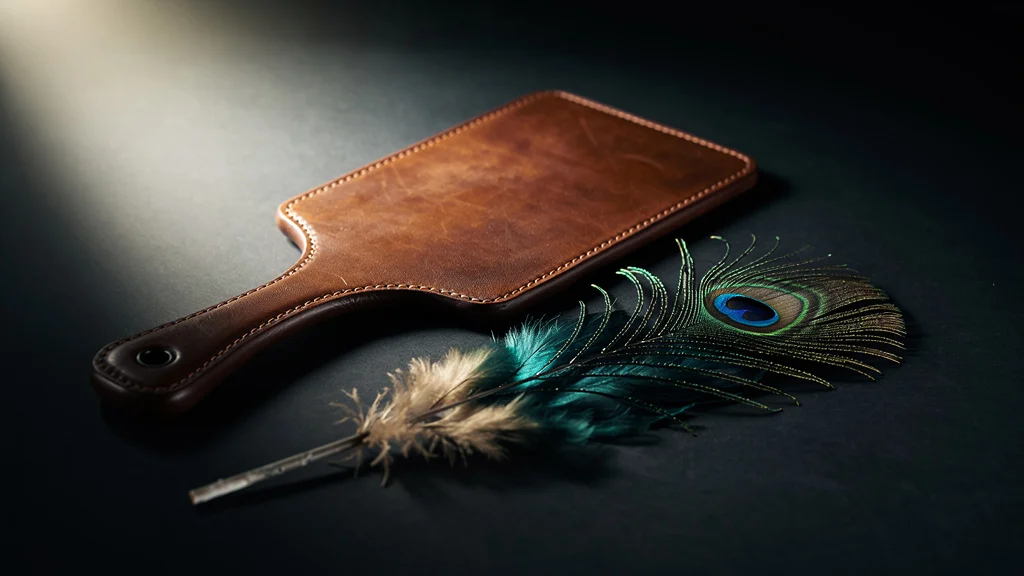
Feathers—from single feathers to feather ticklers—provide sensations lighter than fingertips can achieve. Ostrich, peacock, and marabou feathers each feel different.
Wartenberg wheels (pinwheels) create rolling points of sensation that can be adjusted from light tingling to sharp prickle depending on pressure.
Furs—rabbit, faux fur, leather with fuzzy backing—create soft, enveloping strokes across broad areas.
Brushes vary from makeup brushes (extremely soft) to stiffer paint brushes to bristle scrubbers (more intense).
Fabrics—silk, velvet, rough burlap—dragged across skin create contrasting textures.
Temperature tools—ice cubes, chilled metal, warmed massage stones—add temperature dimension to touch.
Safety Considerations
Light stroking is among the safest BDSM activities, but some considerations apply for optimal experiences.
Physical Safety
Skin sensitivity varies by person and area. What feels pleasurable on arms might be unbearably ticklish on feet. Start gently and observe responses; adjust based on feedback. Some people have areas where any light touch triggers unpleasant tickle responses rather than erotic sensation—these may need firmer pressure or avoidance.
Allergies and sensitivities matter with tools. Real feathers can trigger allergies; some synthetic materials cause skin reactions; certain woods or metals may be problematic for specific individuals. Test new implements on a small area before extensive use.
Temperature tools require care—ice should never be applied directly to sensitive areas for extended periods (frostbite risk), and heated items should be tested on the giver's own skin first (burn risk). Move temperature tools; don't hold them stationary.
Wartenberg wheels can puncture skin if pressed too firmly or used at wrong angles. They're designed for neurological testing, not piercing—use light pressure and rolling motion, not pressing or dragging.
Hygiene applies to shared implements. Clean feathers, brushes, and other tools between partners. Some items can be difficult to fully sanitize; consider dedicating personal tools rather than sharing.
Emotional Safety
Light touch creates vulnerability—being touched so gently requires surrender and can surface unexpected emotions. Some people find it more intimate than intense play; others find it frustrating when they want more. Check in about emotional responses, not just physical sensation.
Combined with restraint or blindfolds, light stroking intensifies psychological vulnerability. The receiver doesn't know where touch will land next, creating anticipation that can be delicious or overwhelming. Maintain communication and honor requests to adjust.
Red Flags
Adjust or stop for: genuine distress rather than playful squirming, skin reactions (hives, excessive redness), persistent discomfort with specific touch types, or emotional overwhelm. Light stroking should feel good—if it doesn't, troubleshoot or move to other activities.
Beginner's Guide
Start with hands only—no tools. Explore your partner's body with varying pressure and speed, observing responses. Where do they lean into touch? Where do they pull away? Where do they shiver? This mapping creates foundation knowledge for all future sensation play.
Practice intentional touch—rather than absent-minded stroking, bring full attention to the sensation you're creating. Feel the texture of your partner's skin, the warmth, the subtle responses. This mindfulness transfers to your partner; intentional touch feels different than casual touch.
Experiment with eyes closed—both giving and receiving. Without visual input, sensation intensifies and both partners tune into touch more acutely. Blindfolding the receiver is classic for this reason, but closing your own eyes while giving also enhances the experience.
Introduce tools one at a time. Start with something familiar (a scarf or soft fabric), then progress to purpose-built sensation toys. Learn what each tool does on your own skin first, then introduce it to your partner with their knowledge—surprise tools can backfire if the sensation is unexpected.
Integrate light stroking with other activities rather than making it a standalone practice initially. Use it during bondage setup, between impact sets, during oral sex pauses, or as aftercare. This integration shows how light touch enhances everything else.
Discussing with Your Partner
Discuss sensitivity and ticklishness openly. Some areas that seem like they should respond well to light touch may actually trigger uncomfortable tickle responses. Know your partner's tickle zones versus erotic sensitivity zones—they're not the same.
Talk about what you each hope to experience. Light stroking can be: deeply relaxing and connecting, frustratingly teasing, hypnotically arousing, or a complement to more intense activities. Ensure you're pursuing compatible experiences.
Share tool preferences or curiosities. Your partner might love the idea of feathers but find wartenberg wheels intimidating—or vice versa. Build a shared toolkit based on mutual interest rather than assumptions about what "should" feel good.
Discuss context—when does light stroking appeal? As foreplay? During scenes? As standalone intimacy? As aftercare? Understanding where this fits in your intimate life helps integrate it naturally.
Address the vulnerability aspect. Light touch can feel more intimate than intense play for some people. Ensure both partners are comfortable with this level of gentleness—it requires a different kind of openness than absorbing impact or enduring bondage.
Frequently Asked Questions
How do I avoid triggering ticklishness when I want sensuality?
Ticklish responses often come from: too-light touch (increase pressure slightly), unpredictable movement (establish patterns), or touching tickle-trigger zones (avoid or use firmer touch there). Slower movement typically reads as sensual rather than tickling. Ask your partner to breathe deeply—tense anticipation increases tickle response. Some people simply can't receive light touch on certain areas; respect this rather than trying to "train" them past it.
What's the best feather for sensation play?
Ostrich feathers are popular—soft, dramatic, and available in various sizes. Peacock feathers offer firmness with trailing softness. Marabou (fluffy feathers often on a handle) provides broad, cloud-like sensation. Quality matters; cheap feathers shed and have rough quills. For starting out, a simple ostrich feather or quality feather tickler works well. Some people prefer multiple types for variety.
Can light stroking lead to orgasm?
For some people, yes—particularly when highly aroused, sensitized through edging, or naturally responsive to light stimulation. Extended light stroking of erogenous areas, especially when combined with restriction or anticipation, can build arousal to climax without direct genital stimulation. This isn't universal; many people need more direct stimulation for orgasm regardless of how sensitized they become.
How do I incorporate light stroking in BDSM scenes?
Use it for contrast: after impact, gentle stroking soothes and highlights tenderness of struck areas. During bondage: stroke exposed skin to emphasize helplessness and build anticipation. For teasing: light genital touching that refuses to provide enough stimulation to satisfy. In service scenarios: massage or caressing as part of body worship. The key is intentionality—every touch communicates something within the scene narrative.
Is sensation play only for submissives to receive?
Anyone can enjoy receiving light sensation regardless of role. Some dynamics have dominants receive sensation play as worship or service; others feature switches exchanging. The power dynamic doesn't determine who finds pleasure in touch—it determines the framing. A dominant receiving devoted touch differs from a submissive receiving teasing touch, but both are valid expressions of light sensation in BDSM contexts.
🛒 Recommended Gear
Note: Links below are affiliate links. We may earn a commission at no extra cost to you.
Discover What You Both Desire
Create your personal checklist and compare with your partner to find activities you'll both enjoy exploring together.
Get Started FreeNo credit card required