Bondage
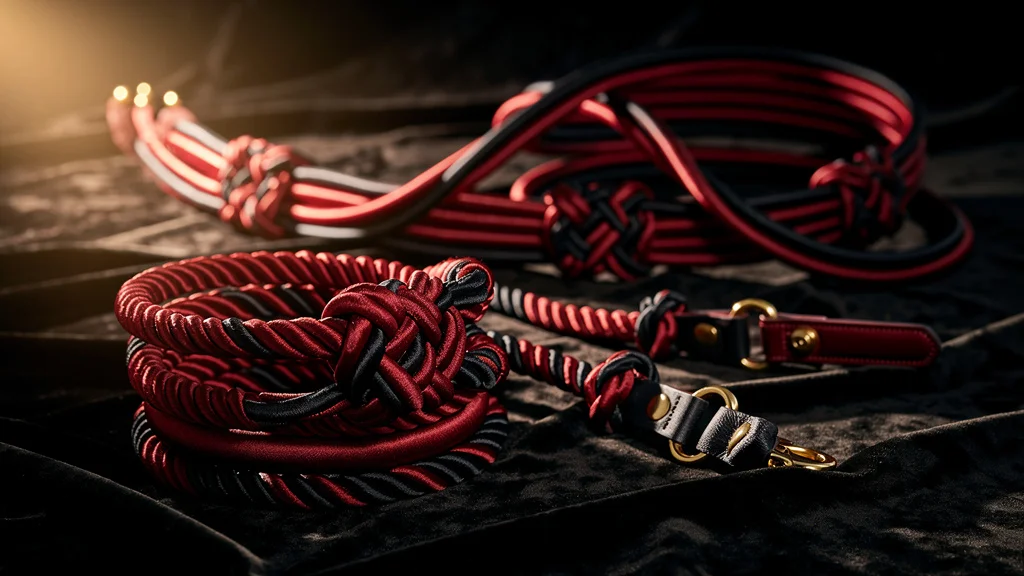
Ready to explore Bondage with your partner?
Start Your ChecklistBondage represents one of the foundational practices in BDSM, involving consensual restraint of a partner using various materials and techniques. From simple wrist ties to elaborate rope artistry, bondage offers a spectrum of experiences that range from playful exploration to profound power exchange.
At its core, bondage creates a physical manifestation of trust and surrender. When one partner consents to be restrained, they place their safety and wellbeing in the hands of another. This vulnerability, combined with the sensory experience of being bound, can create intense emotional and physical responses that many practitioners find deeply satisfying.
Whether you're curious about adding light restraints to your intimate life or interested in learning traditional Japanese rope bondage (Shibari), understanding the fundamentals of safe bondage practice is essential. This guide covers everything from basic safety principles to different types of bondage, helping you explore this practice with confidence and awareness.
The world of bondage encompasses a rich variety of techniques, materials, and aesthetics. Some practitioners focus on the functional aspect—the restriction of movement itself—while others view bondage as an art form, creating intricate patterns and suspensions that are as beautiful as they are restrictive. Many find that bondage enhances other forms of play, creating a foundation for sensory exploration, impact play, or simply intimate connection.
Understanding Bondage in BDSM
Bondage refers to the practice of consensually restraining a partner using various implements such as rope, cuffs, tape, chains, or other restraint devices. It can range from simple restraints during intimate moments to elaborate artistic expressions that may include suspension.
Types of Bondage
The spectrum of bondage practices is vast and varied:
- Light Bondage: Simple restraints using scarves, ties, or beginner-friendly cuffs—ideal for those new to the practice
- Rope Bondage: Using various types of rope to create ties ranging from functional restraints to decorative patterns
- Shibari/Kinbaku: Japanese rope bondage emphasizing aesthetics, sensation, and the connection between partners
- Predicament Bondage: Positions that create physical or psychological challenges for the bound partner
- Suspension: Advanced practice involving partial or full body suspension—requires extensive training
- Self-Bondage: Solo practice requiring extreme caution and safety measures
The Psychology of Bondage
The appeal of bondage varies among practitioners. For those being bound, the experience often includes the freedom of surrendering control, the meditative quality of restriction, and the intense trust required. For those doing the binding, the appeal may include the responsibility of caring for a vulnerable partner, the artistic expression, and the power dynamic created.
Many report that bondage creates a sense of being "held" or contained that feels psychologically nurturing. The physical restriction can quiet an overactive mind, creating a form of moving meditation. Others find that the vulnerability of being bound intensifies all other sensations and emotions.
Historical and Cultural Context
Bondage practices appear throughout human history, from ancient ritualistic uses to medieval restraints to modern artistic expressions. Japanese Shibari evolved from martial arts restraint techniques (Hojojutsu) into an erotic art form in the early 20th century. Western bondage traditions have their own evolution, influenced by everything from escape artist performances to the emergence of BDSM subculture.
Essential Safety Guidelines for Bondage
Safety in bondage is paramount. Even seemingly simple restraints can cause injury if applied incorrectly. Understanding and following safety protocols protects both partners and allows for confident exploration.
Before You Begin
- Communication: Discuss limits, desires, and concerns openly. Establish safe words and signals that either partner can use at any time.
- Physical Assessment: Check for any injuries, circulation issues, or conditions that might be affected by restraint. Avoid binding over joints.
- Prepare Your Space: Have safety shears readily accessible—never rely on knots alone. Ensure the environment is comfortable and safe.
- Choose Appropriate Materials: Use bondage-specific rope (soft, non-stretching, 6-8mm for most purposes) or purpose-built restraints.
During Bondage
- Monitor Circulation: Check for color changes, temperature drops, tingling, or numbness in bound areas every few minutes.
- Nerve Safety: Avoid pressure on vulnerable nerve areas: inner arms, backs of knees, neck, and armpits.
- Two-Finger Rule: You should always be able to fit two fingers between restraints and skin.
- Never Leave Unattended: A bound person should never be left alone—emergencies can happen quickly.
- Time Limits: Limit how long any area remains bound—typically 15-20 minutes maximum for beginners.
Emergency Procedures
Always have EMT shears or safety scissors within arm's reach—standard scissors may not cut rope safely. Know where all knots are and how to release them quickly. If any concerning symptoms appear (severe pain, numbness that doesn't resolve quickly, difficulty breathing), release restraints immediately.
Aftercare
Physical aftercare includes gently massaging areas that were bound, checking skin for marks or concerns, and ensuring circulation has fully returned. Emotional aftercare may involve holding, talking, hydration, and processing the experience together. Bondage can be emotionally intense for both partners.
Popular Bondage Activities
Bondage encompasses a wide range of activities, from simple bedroom restraints to complex artistic expressions. Here's an overview of common bondage practices:
Wrist and Ankle Restraints
The most common entry point into bondage. Simple cuffs or ties restrict the hands or feet, limiting movement while keeping the practice approachable. Leather cuffs with quick-release mechanisms offer ease of use, while rope ties provide more customization.
Spread-Eagle Position
A classic bondage position where the person is restrained with arms and legs spread, typically to a bed frame or dedicated furniture. This position creates vulnerability and exposure while being relatively comfortable for extended periods.
Chest Harnesses
Rope or leather harnesses that wrap around the torso, creating aesthetic patterns while providing anchor points for other ties. Japanese-style chest harnesses (like the Takate Kote) are both functional and beautiful.
Hogtie
A position connecting wrists and ankles behind the body. Creates intense restriction and vulnerability. Requires careful attention to breathing and shoulder strain—not suitable for extended periods.
Mummification
Full-body wrapping using materials like cling wrap, bandages, or specialized bondage tape. Creates complete immobilization and intense sensory deprivation. Requires careful attention to temperature regulation and breathing.
Rope Art (Shibari)
Japanese-inspired rope bondage focusing on aesthetic patterns, the experience of being tied, and the connection between rigger and model. Emphasizes the process of tying as much as the final result.
Furniture Bondage
Using specialized BDSM furniture—benches, crosses, cages, or suspension frames—to position and restrain. These pieces often allow for positions impossible with rope alone.
Each type of bondage offers different experiences and requires specific safety knowledge. Start with simpler practices and progress as you build skills and understanding.
Getting Started with Bondage
For Complete Beginners
If you're new to bondage, start with what you have available and build from there. A soft scarf or tie can be used to loosely bind wrists for your first exploration. The goal is to experience the sensation and psychology of restraint before investing in equipment or learning techniques.
Purchase basic bondage cuffs with quick-release mechanisms—these provide safety while you learn. Velcro cuffs are excellent for beginners as they adjust easily and release instantly. As comfort grows, you can explore more traditional restraints.
Building Your Skills
- Take It Slow: Master one tie or technique before moving to the next. Quality over quantity.
- Practice on Yourself: Try ties on your own thigh to understand how they feel before using them on a partner.
- Learn from Experts: Attend workshops, watch tutorials from verified educators, or join local BDSM community groups.
- Invest in Quality Materials: Good bondage rope (jute, hemp, or synthetic) is worth the investment for safety and experience.
- Start with Floor Work: Master bondage on the ground before attempting positions on furniture or any elevation.
Progressing Your Practice
As you become comfortable with basic restraints, you might explore more complex ties, different positions, or combining bondage with other forms of play. Suspension should only be attempted after extensive training—it carries significant risks that require expert knowledge to manage safely.
Resources for Learning
Look for bondage education from established educators in the BDSM community. Local munches (social gatherings) often connect people with experienced practitioners willing to teach. Books by recognized riggers provide detailed instruction for those preferring self-study.
Communication and Negotiation
Effective communication is the foundation of safe, enjoyable bondage. Both partners should feel empowered to express desires and limits without judgment.
Pre-Scene Negotiation
Before any bondage, discuss: What areas of the body are okay to bind? What positions are comfortable? Are there any physical limitations or injuries to consider? What are hard limits? What does each person hope to experience?
During the Scene
Establish clear communication methods. Safe words work well when the mouth is free. For situations where speaking is difficult, establish non-verbal signals—like dropping a ball or making specific sounds. The rigger should regularly check in, watching for physical and emotional responses.
Types of Communication
- Safe Word: A word (commonly "red") that immediately stops all activity
- Slow Down Word: A word (commonly "yellow") that indicates the edge is being approached
- Check-Ins: Regular verbal or non-verbal confirmation that everything is okay
- Non-Verbal Signals: Agreed-upon gestures when speech isn't possible
After the Scene
Debrief after bondage experiences. What worked well? What would you do differently? How did each person feel physically and emotionally? This ongoing communication improves future experiences and strengthens trust.
Frequently Asked Questions
Is bondage safe?
Bondage can be practiced safely when proper precautions are followed. This includes using appropriate materials, monitoring circulation, keeping safety tools accessible, never leaving a bound person unattended, and learning proper techniques. Like many activities, the risks increase with complexity—suspension and advanced practices require extensive training.
What equipment do I need to start?
Beginners can start with simple items: soft scarves, ties, or purpose-made beginner cuffs with quick-release mechanisms. As you progress, you might invest in bondage rope (6-8mm jute, hemp, or synthetic), quality leather cuffs, or specialized furniture. Always have safety shears accessible regardless of what restraints you use.
How tight should restraints be?
Follow the two-finger rule: you should always be able to slip two fingers between any restraint and the skin. Restraints should restrict movement without cutting off circulation. Check frequently for changes in skin color or temperature, and release immediately if numbness or tingling occurs.
What if I or my partner has anxiety about being restrained?
Start extremely slowly with minimal restraint—perhaps just holding wrists together without any binding. Build trust gradually. Consider trying "honor bondage" where the person being restrained simply agrees not to move, experiencing the psychology without physical restriction. Anxiety often decreases with positive experiences and clear communication.
How long can someone safely remain in bondage?
This varies based on the type of bondage and position. For beginners, limit any position to 15-20 minutes. Some comfortable positions can be maintained longer with regular circulation checks. Strenuous positions or those affecting breathing should be much shorter. Always prioritize the bound person's feedback over arbitrary time limits.
What's the difference between Shibari and Western bondage?
Shibari (or Kinbaku) is Japanese rope bondage that emphasizes aesthetic patterns, the experience of being tied, and the meditative connection between partners. Western bondage traditions often focus more on functional restraint and may use a wider variety of materials beyond rope. Both traditions have evolved and influenced each other significantly.
Bondage Equipment Guide
A solid bondage guide covers the full spectrum of restraint materials, each with its own feel, safety profile, and aesthetic. Choosing the right bondage equipment depends on your experience level, the type of experience you want to create, and your budget.
Rope
Rope is the most versatile bondage material and the foundation of Japanese Shibari and Western bondage traditions alike. Different fibers offer different experiences:
- Jute Rope: The traditional Shibari material — rough texture, holds knots well, absorbs body heat. Requires conditioning and care but preferred by most serious riggers.
- Hemp Rope: Slightly softer than jute with similar handling properties. A popular natural-fiber alternative for beginners moving beyond synthetic rope.
- Cotton Rope: Softest natural fiber option — gentle on skin, easy to find. Knots can tighten under load, so use quick-release configurations.
- Nylon Rope: Smooth, easy to wash, beginner-friendly. Lacks the grip of natural fibers but is forgiving and low-maintenance.
Whatever rope you choose, use 6–8mm diameter for most body ties. Thinner rope concentrates pressure and increases nerve/circulation risk.
Cuffs and Restraints
Cuffs are the most beginner-accessible bondage equipment — most have quick-release buckles or Velcro closures that eliminate the complexity of knots:
- Wrist Cuffs: The most popular starting point. Look for padded leather or neoprene cuffs with D-rings for attaching to furniture or spreader bars.
- Leather Cuffs: Durable and aesthetically classic BDSM restraints. Higher-quality leather molds to the body over time.
- Metal Cuffs: Maximum security aesthetic — rigid and unforgiving. Require careful fit and should never be used for extended periods or suspension.
- Handcuffs: Police-style cuffs are popular for roleplay but carry higher injury risk — they can tighten and have no padding.
Full-Body Restraints
- Straight Jackets: Enclosure bondage that restricts arm movement while leaving legs free. Creates intense helplessness.
- Sleep Sacks: Full-body enclosure restraints that create mummification-like immobilization. Often combined with sensory deprivation.
- Mummification: Full-body wrapping using cling wrap, bandages, or tape — creates complete immobilization and intense sensory experience.
Suspension Equipment
Suspension bondage — including horizontal, inverted, and upright positions — requires dedicated rigging points rated for dynamic loads. Never suspend from door frames, curtain rods, or untested anchor points. This is advanced practice that should only be attempted after in-person training with experienced riggers.
Sensory Deprivation Additions
Bondage pairs powerfully with sensory deprivation. Common additions include blindfolds, full head hoods, and ear plugs that remove visual and auditory input, amplifying every touch and sensation.
Bondage for Beginners — A Step-by-Step Starting Guide
Bondage for beginners doesn't require special equipment or prior skills. The most important tools are communication, trust, and the willingness to go slowly. This guide walks you through your first bondage experiences in a safe, confidence-building sequence.
Step 1: Conversation Before Cord
Before any restraint, have an explicit conversation. Discuss: What appeals to each of you about bondage? What are absolute limits — positions, materials, body areas? What is your safe word? What does aftercare look like for you? This conversation isn't just safety protocol — it's part of the experience.
Step 2: Your First Restraint Session
For your very first experience, skip rope entirely. Use a soft scarf or purpose-made beginner cuffs. Try light bondage — loosely binding wrists together in front of the body. The goal is experiencing the psychology of restraint, not perfecting technique. Spend 5–10 minutes. Check in frequently. Release and discuss what you felt.
Step 3: Build the Toolkit
Once you've tried basic wrist restraint, invest in beginner equipment: padded cuffs with quick-release buckles and a pair of spreader bars for ankle separation. These give you flexibility to create different positions without knot-tying skills.
Step 4: Learn One Rope Tie
If rope interests you, start with a single tie: the simple simple rope bondage wrist tie. Practice it on your own thigh first to understand how it feels. Learn to release it quickly. Master this one tie completely before learning another.
Step 5: Progress Deliberately
Progression in bondage looks like: wrist ties → ankle ties → combining both → body harnesses → positions involving restraint to furniture → predicament bondage. Each step requires mastering the previous one. Suspension bondage (Shibari and other forms) should only be attempted after extensive in-person training.
Safety Equipment You Must Have
Before your first session: buy EMT shears (safety scissors designed to cut through rope and clothing quickly). Place them within arm's reach before any session begins. This is non-negotiable regardless of how simple the restraint.
Bondage Safety: Nerve Damage, Circulation, and Emergency Response
Bondage safety extends beyond general BDSM safety principles. Rope and restraints can cause specific injuries — nerve damage, circulation restriction, and positional injuries — that require targeted knowledge to prevent.
Nerve Damage Prevention
The most serious bondage injury is nerve damage, particularly to the radial nerve (inner arm, wrist area) and the common peroneal nerve (back of the knee). Symptoms: sudden sharp pain, tingling, numbness, or weakness in the affected limb. These symptoms require immediate release of restraints — do not wait to see if they pass.
- Never place rope or restraints directly over joints — wrists, elbows, knees
- Avoid the spiral groove of the humerus (inner upper arm) where the radial nerve runs close to the surface
- Avoid the popliteal fossa (back of the knee) — compression here damages the common peroneal nerve
- Armpits must remain clear — the brachial plexus runs through this area
Circulation Checks
Check circulation every 5–10 minutes during any bondage session. The two-finger rule (you can always slip two fingers between restraint and skin) is a baseline, not a guarantee. Also check:
- Color: skin below restraint should remain normal, not turning blue or purple
- Temperature: bound areas should feel warm, not cold
- Sensation: the bound person should be able to feel light touch — ask them periodically
- Capillary refill: press fingernail until white, release — color should return within 2 seconds
Emergency Release Protocol
If any circulation or nerve symptom appears: release restraints immediately. Use EMT shears to cut rope rather than fumbling with knots under stress. After release, gently massage the affected area, encourage movement, and monitor recovery. Symptoms that don't resolve within a few minutes require medical attention.
Positional Safety
Extended time in any bondage position creates risk beyond the restraint itself. Change positions, allow movement, and monitor for:
- Shoulder strain — particularly in arms-behind-back positions
- Knee and hip pressure in kneeling positions
- Restricted breathing in chest harnesses worn tightly
- Core muscle fatigue in suspension
Stress positions and suspension carry exponentially higher risk and require advanced training and vigilance.
Bondage and Related BDSM Practices
Bondage rarely exists in isolation. Most practitioners combine restraint with other forms of play to create layered experiences:
- Sensation Play: Restraint amplifies all physical sensations — the combination of bondage with feathers, ice, wax, or impact creates heightened intensity.
- Dominance and Submission: Physical restraint is one of the most direct expressions of power exchange. Bondage can serve as the physical framework for a D/s dynamic.
- Sado-Masochism: Impact play and restraint frequently combine — the bound person cannot move away from sensation, intensifying the experience.
All Bondage Activities
Explore every activity in the Bondage category. Each page includes a detailed guide, safety information, and compatibility tools to discover shared interests with your partner.
- Arm & leg sleeves (armbinders)
- Arms
- Arms Restraint
- Blindfolding
- Blindfolds
- Bondage - All day/multi day
- Bondage - Heavy
- Bondage - Light
- Bondage Opera Gloves
- Bondage Public, under clothing
- Bondage Restraints
- Bondage Sensory Deprivation
- Bondage Shibari
- Bondage With Soft Restraints
- Bondage Wrist Cuffs
- Breast bondage
- Cages/Cells/Closets - Locked inside
- Chains
- Chastity device/belts
- Chastity Devices
- Chest Harness
- Cockrings
- Collar Locking
- Collars - Worn in private
- Collars - Worn in public
- Containment (Caging / Cells)
- Cotton Rope
- Cuffs - Handcuff Style
- Cuffs - Leather
- Cuffs - Metal
- Duration
- Ear plugs (sound deprivation)
- Full Body
- Full head hoods
- Gags - Ball
- Gags - Bit
- Gags - Cloth
- Gags - Inflatable
- Gags - Phallic
- Gags - Ring
- Gags - Rubber
- Gags - Tape
- Genital Bondage
- Hair
- Handcuffs
- Harnessing - Leather
- Harnessing - Rope
- Hemp Rope
- Immobilisation
- Intricate Rope / Shibari
- Leash
- Leather restraints
- Legs
- Manacles & Irons
- Mental Bondage
- Mouth bits
- multi-day
- Mummification
- Muzzles
- Nose Hooks
- Nose Leashes
- Nylon Rope
- Predicament
- Predicament Bondage
- Public bondage, under clothing
- Public bondage, visible
- Restraint 0-1 hour
- Restraint 3+ hours
- Restraint full day or overnight
- Restraint multi-day
- Rope
- Rope body harness
- Rope Bondage
- Rope bondage - Japanese Style
- Rope bondage - Simple
- Rope Play
- Shibari
- short term
- Sleep sacks
- Slings
- Spreader Bars
- Stocks (head & hands)
- Straight jackets
- Stress Positions
- Suspension
- Suspension Bondage
- Suspension - Horizontal
- Suspension - Inverted
- Suspension (Sex Swing)
- Suspension - Upright
- Tape Bondage
- Zip ties
Discover Your Bondage Interests
Ready to explore what aspects of bondage appeal to you and your partner? Kink Checklist helps you compare interests privately and discover shared curiosities—from simple restraints to elaborate rope work.
Compare bondage interests privately with your partner and find your perfect starting point.
Activities in Bondage (83)
Arm & leg sleeves (armbinders)
Restrictive sleeves designed to bind arms and legs together, limiting movement. Short Explanation: In a D/s dynamic, "Receiving" means you have your limbs bound by the sleeves, while "Giving" means you apply the binding to your partner.
Arms
Restraints or bindings applied to the arms, limiting movement and enhancing submission. Short Explanation: "Receiving" means your arms are restrained, while "Giving" means you are the one applying the restraints.
Arms Restraint
Techniques for restraining arms during bondage play.
Blindfolding
Sensory deprivation through sight restriction to heighten other senses.
Blindfolds
Covers the eyes to enhance sensory deprivation and build anticipation. Short Explanation: "Receiving" means you are blindfolded, losing visual input, while "Giving" means you provide the blindfold to your partner.
Bondage - All day/multi day
She wakes still bound, a reminder before her eyes even open that she's yours. Extended bondage dissolves the line between scene and life, creating a continuous state of surrender that transforms ordinary hours into extraordinary submission.
Bondage - Heavy
Restrictive and complex bondage setups requiring experience and preparation. Short Explanation: "Receiving" means you are subjected to heavy bondage, while "Giving" means you apply these complex restraints to your partner.
Bondage - Light
Casual and minimal restraint for comfort and flexibility. Short Explanation: "Receiving" means you experience light restraint, while "Giving" means you apply minimal bondage to your partner.
Bondage Opera Gloves
Gloves with extended cuffs, often used for aesthetic or light bondage purposes. Short Explanation: "Receiving" means you wear these gloves as part of your restraint, while "Giving" means you use them to restrain your partner.
Bondage Public, under clothing
Nobody knows about the ropes beneath her dress — but she feels them with every breath, every step, every moment. Secret bondage turns an ordinary day into your private game, keeping her connected to you even when you're apart.
Bondage Restraints
Various tools and techniques used for restraining a partner.
Bondage Sensory Deprivation
Blindfolded, ears covered, unable to move — she floats in darkness, every remaining sense screaming for the touch only you can give. Sensory deprivation strips away the world until you become her entire reality.
Bondage With Soft Restraints
Gentle bondage using soft materials like silk scarves or padded cuffs.
Breast bondage
Restrictive binding of the breasts for sensation play and aesthetic appeal. Short Explanation: "Receiving" means your breasts are bound, while "Giving" means you apply the bondage to your partner.
Cages/Cells/Closets - Locked inside
Confinement play involving small spaces and restriction of movement. Short Explanation: "Receiving" means you are confined in a small space, while "Giving" means you confine your partner.
Chains
Metal restraints used for weight, restriction, and sound effects. Short Explanation: "Receiving" means you are restrained with chains, while "Giving" means you use chains to restrain your partner.
Chastity Devices
Devices designed to prevent sexual activity by restricting access to the genitals. Short Explanation: "Receiving" means you are locked in chastity, while "Giving" means you apply the device to your partner.
Chest Harness
The ropes wrap around her chest like a second skin — functional, beautiful, unmistakably yours. A chest harness isn't just bondage. It's a visible mark of ownership that she carries with her, even under clothes.
Cockrings
Rings worn around the base of the penis for enhancing erections or providing restraint. Short Explanation: "Receiving" means you wear the cockring, while "Giving" means you provide or apply it to your partner.
Collar Locking
The practice of wearing a locked collar as a symbol of ownership or commitment.
Containment (Caging / Cells)
Locking someone inside a confined space such as a cage or a cell as a form of restriction. Short Explanation: "Receiving" means you are confined, while "Giving" means you confine your partner.
Cotton Rope
A soft and comfortable natural fiber rope, often used for lighter bondage or decorative ties. Short Explanation: "Receiving" means you are bound with the cotton rope, while "Giving" means you use it to restrain your partner.
Cuffs - Leather
Soft yet restrictive wrist and ankle cuffs made of leather. Short Explanation: "Receiving" means you experience leather restraints, while "Giving" means you use them to secure your partner.
Duration
The length of time bondage is maintained, which affects endurance and psychological impact. Short Explanation: "Receiving" means you undergo a set duration of restraint, while "Giving" means you control the length of the bondage session.
Ear plugs (sound deprivation)
Used to block out sound for sensory deprivation experiences. Short Explanation: "Receiving" means you have ear plugs in to reduce sound, while "Giving" means you provide ear plugs to your partner.
Full Body
Comprehensive bondage that restrains the entire body, limiting movement almost entirely. Short Explanation: "Receiving" means your whole body is restrained, while "Giving" means you apply full body bondage to your partner.
Full head hoods
Covers the entire head, often reducing sight, sound, and identity. Short Explanation: "Receiving" means you wear the hood, while "Giving" means you use the hood on your partner.
Gags - Ball
The ball gag fills her mouth and suddenly her protests become muffled sounds that only make you want her more. Gagging takes away her words, leaving only eyes and body language to communicate what she's feeling.
Gags - Bit
A horse-style bit gag that applies pressure while allowing minimal speech. Short Explanation: "Receiving" means you experience the bit gag, while "Giving" means you provide it to your partner.
Gags - Cloth
A simple cloth gag that muffles sound and restricts speech. Short Explanation: "Receiving" means you are gagged with a cloth gag, while "Giving" means you apply the gag to your partner.
Gags - Inflatable
A gag that can be inflated to control the level of restriction. Short Explanation: "Receiving" means you experience the inflatable gag, while "Giving" means you control the inflation on your partner.
Gags - Phallic
A gag with a phallic shape for oral fixation and restraint. Short Explanation: "Receiving" means you have the phallic gag in place, while "Giving" means you apply it to your partner.
Gags - Ring
A ring gag that keeps the mouth open for accessibility and control. Short Explanation: "Receiving" means your mouth is held open by the gag, while "Giving" means you use the gag on your partner.
Gags - Rubber
A soft rubber gag that restricts speech while ensuring comfort. Short Explanation: "Receiving" means you wear the rubber gag, while "Giving" means you apply it to your partner.
Gags - Tape
A straightforward way to silence using adhesive tape. Short Explanation: "Receiving" means you are taped up, while "Giving" means you tape your partner.
Genital Bondage
Bondage techniques focused on the genitals, such as cock and ball torture (CBT) or genital restraints for females. Short Explanation: "Receiving" means your genitals are restrained, while "Giving" means you apply genital bondage to your partner.
Hair
Using the hair as a point of bondage, such as tying it to restraints or pulling it for control. Short Explanation: "Receiving" means you experience hair being used in restraint, while "Giving" means you use hair as part of your bondage technique.
Handcuffs
Using handcuffs or similar restraints for bondage and power exchange.
Harnessing - Leather
Leather straps designed for restraint, support, or decorative binding. Short Explanation: "Receiving" means you are restrained with leather harnessing, while "Giving" means you use the straps to bind your partner.
Harnessing - Rope
Intricate rope arrangements used for restraint and aesthetic display. Short Explanation: "Receiving" means you are bound with rope harnessing, while "Giving" means you apply intricate rope bondage to your partner.
Hemp Rope
A natural fiber rope known for its strength and durability, often used for bondage. Short Explanation: "Receiving" means you are restrained with hemp rope, while "Giving" means you use it to bind your partner.
Immobilisation
Techniques and devices designed to completely restrict movement. Short Explanation: "Receiving" means you experience complete immobilisation, while "Giving" means you impose immobilisation on your partner.
Intricate Rope / Shibari
A traditional Japanese rope bondage style focusing on aesthetics, control, and intricate patterns. Short Explanation: "Receiving" means you are bound in traditional shibari, while "Giving" means you apply shibari techniques to your partner.
Leash
A tether attached to a collar for control and direction. Short Explanation: "Receiving" means you wear the leash, while "Giving" means you attach it to your partner.
Leather restraints
Strong yet comfortable restraints made from leather. Short Explanation: "Receiving" means you are restrained by leather restraints, while "Giving" means you use them to secure your partner.
Legs
Restraints or bindings applied to the legs, preventing walking or movement. Short Explanation: "Receiving" means your legs are bound, while "Giving" means you restrain your partner’s legs.
Manacles & Irons
Heavy-duty metal restraints for historical or extreme bondage play. Short Explanation: "Receiving" means you are confined by manacles or irons, while "Giving" means you apply these restraints to your partner.
Mental Bondage
Bondage that focuses on psychological restraint rather than physical, such as obedience training or imagined restrictions. Short Explanation: "Receiving" means you experience psychological restraint, while "Giving" means you impose mental bondage on your partner.
Mouth bits
A type of gag that mimics an equestrian bit for control. Short Explanation: "Receiving" means you have a mouth bit in place, while "Giving" means you apply it to your partner.
multi-day
Extended chastity play, where access to the genitals is restricted for multiple days or longer. Short Explanation: "Receiving" means you are engaged in long-term restraint, while "Giving" means you enforce multi-day chastity on your partner.
Mummification
Completely wrapping the body using plastic, bandages, or other materials for extreme restriction and sensory deprivation. Short Explanation: "Receiving" means you are fully wrapped and immobilised, while "Giving" means you apply the mummification to your partner.
Muzzles
A restraint that covers the mouth, often used for speech control. Short Explanation: "Receiving" means you wear the muzzle, while "Giving" means you apply it to your partner.
Nose Hooks
Small hooks inserted into the nostrils for attaching a leash or for aesthetic purposes. Short Explanation: "Receiving" means you experience the restraint of nose hooks, while "Giving" means you apply them to your partner.
Nose Leashes
A leash attached to a nose hook for control and guidance. Short Explanation: "Receiving" means you wear a nose leash, while "Giving" means you use one to restrain your partner.
Nylon Rope
A synthetic rope that is strong and resistant to abrasion, commonly used for bondage. Short Explanation: "Receiving" means you are restrained with nylon rope, while "Giving" means you use it for bondage on your partner.
Predicament
She can ease the strain on her wrists — but only by tightening the rope around her thighs. Every position is a choice, every moment a trade-off. That's predicament bondage: where you control which discomfort she embraces.
Predicament Bondage
What if the ropes weren't just holding her still — but forcing her to make an impossible choice? That's predicament bondage: where every position is a trade-off, and you control which discomfort she embraces.
Public bondage, under clothing
Discreet bondage worn beneath clothing for hidden restraint in public settings. Short Explanation: "Receiving" means you experience hidden restraint, while "Giving" means you apply discreet bondage to your partner.
Public bondage, visible
Bondage that is visible to others in a public or semi-public setting. Short Explanation: "Receiving" means you are visibly restrained, while "Giving" means you impose visible bondage on your partner.
Restraint 0-1 hour
Short-term bondage, typically used for quick sessions or beginners. Short Explanation: "Receiving" means you experience brief restraint, while "Giving" means you administer short-term bondage.
Restraint 3+ hours
Extended bondage lasting several hours, requiring careful planning for comfort and safety. Short Explanation: "Receiving" means you are bound for an extended period, while "Giving" means you apply long-term restraint to your partner.
Restraint full day or overnight
Bondage that lasts an entire day or overnight, often requiring breaks and monitoring. Short Explanation: "Receiving" means you undergo full-day or overnight restraint, while "Giving" means you enforce extended bondage on your partner.
Restraint multi-day
Long-term bondage spanning multiple days, typically with supervision and safety precautions. Short Explanation: "Receiving" means you experience multi-day restraint, while "Giving" means you administer long-term bondage to your partner.
Rope body harness
A full-body rope arrangement for aesthetic and functional restraint. Short Explanation: "Receiving" means you are restrained by a rope body harness, while "Giving" means you create and apply the harness to your partner.
Rope Bondage
The practice of using rope to restrain a partner for pleasure, intimacy, or art.
Rope bondage - Japanese Style
Traditional shibari techniques with intricate patterns and controlled tension. Short Explanation: "Receiving" means you experience traditional Japanese rope bondage, while "Giving" means you apply shibari techniques to your partner.
Rope bondage - Simple
Basic rope ties designed for easy application and release. Short Explanation: "Receiving" means you are bound with simple rope ties, while "Giving" means you apply basic rope bondage to your partner.
Shibari
Japanese rope bondage art combining aesthetic beauty with restraint techniques.
short term
Temporary chastity play, usually lasting for a few hours to a day. Short Explanation: "Receiving" means you experience short-term restraint, while "Giving" means you administer temporary bondage.
Sleep sacks
A restrictive sack that encases the body for sensory deprivation. Short Explanation: "Receiving" means you are enclosed in a sleep sack, while "Giving" means you use it to restrain your partner.
Slings
Fabric or leather supports used to hold a body part in place, often used for suspension or to aid in specific positions. Short Explanation: "Receiving" means you experience restraint via slings, while "Giving" means you apply them to support your partner.
Spreader Bars
Bars used to keep limbs apart, limiting movement. Short Explanation: "Receiving" means you are restrained with spreader bars, while "Giving" means you use them to enforce separation of your partner’s limbs.
Stocks (head & hands)
A wooden or metal frame that restrains the head and hands in a fixed position. Short Explanation: "Receiving" means you are confined in stocks, while "Giving" means you apply stocks to restrain your partner.
Straight jackets
A full-body restraint garment that restricts arm movement. Short Explanation: "Receiving" means you wear a straight jacket, while "Giving" means you use it to restrain your partner.
Stress Positions
Positions that create physical discomfort by forcing the body into unnatural postures for prolonged periods. Short Explanation: "Receiving" means you are forced into stress positions, while "Giving" means you impose such postures on your partner.
Suspension
Being suspended off the ground using ropes, chains, or other restraint devices, requiring careful safety measures. Short Explanation: "Receiving" means you are suspended, while "Giving" means you suspend your partner.
Suspension Bondage
Advanced bondage involving partial or full suspension of the body.
Suspension - Horizontal
Being suspended in a horizontal position while lying in the air, allowing for different body angles and experiences while requiring careful balance. Short Explanation: "Receiving" means you experience horizontal suspension; "Giving" means you arrange horizontal suspension for your partner.
Suspension - Inverted
Being suspended upside-down, increasing the intensity of sensation and restriction while affecting blood flow. Short Explanation: "Receiving" means you are inverted in suspension; "Giving" means you arrange inverted suspension for your partner.
Suspension (Sex Swing)
She floats weightless in the swing, completely open to you from every angle. Sex swings remove gravity's limits, letting you position her exactly where you want her — and keeping her there as long as you desire.
Suspension - Upright
Being suspended while remaining in a standing or vertical position for restraint and aesthetic appeal. Short Explanation: "Receiving" means you are suspended upright; "Giving" means you provide upright restraint to your partner.
Tape Bondage
Using tape for restraint or to create sensations on the skin. Short Explanation: "Receiving" means you experience restraint with tape, while "Giving" means you use tape to bind your partner.
Zip ties
Plastic cable ties used for quick and secure restraint. Short Explanation: "Receiving" means you are bound with zip ties, while "Giving" means you apply them to restrain your partner.
Discover What You Both Desire
Create your personal checklist and compare with your partner to find activities you'll both enjoy exploring together.
Get Started FreeNo credit card required