Harnessing - Rope
Intricate rope arrangements used for restraint and aesthetic display. Short Explanation: "Receiving" means you are bound with rope harnessing, while "Giving" means you apply intricate rope bondage to your partner.
Read the full Yes/No/Maybe list guide or browse all activities.
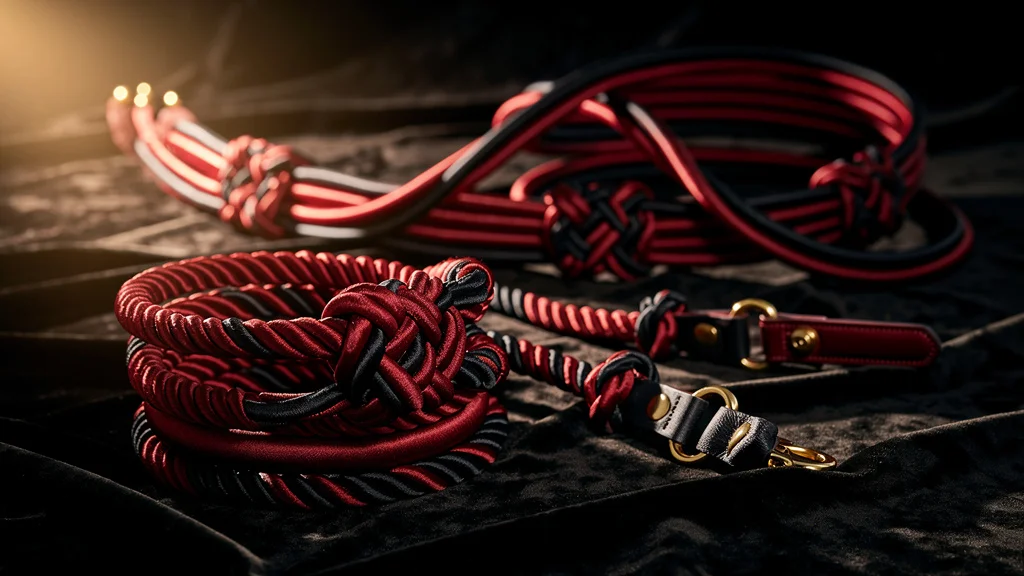
Interested in exploring Harnessing - Rope with your partner?
Start Your ChecklistRope harnesses—structured patterns of rope wrapped around the body—combine artistic expression with functional restraint. Unlike pre-made leather harnesses, rope harnesses are created fresh each time, allowing infinite customization to fit any body and serve any purpose. The process of tying becomes part of the experience: deliberate, intimate, and meditative for both rigger and model.
This guide explores rope harnessing from practical and aesthetic perspectives. You'll learn about common harness patterns, the techniques that make them secure and safe, how to select appropriate rope, and how the process of creating a harness differs from simply achieving the end result. Whether you're drawn to rope for its aesthetic beauty, functional restraint, or the intimate ritual of being tied, rope harnessing offers unique experiences.
From simple chest harnesses that take minutes to elaborate full-body patterns requiring extended sessions, rope harnessing scales to match any skill level, time availability, and purpose. The journey from beginner to skilled rigger involves gradual skill building, but even basic harnesses can create powerful experiences.
How Rope Harnessing Works
Rope harnesses rely on structural patterns that distribute tension safely across the body while creating aesthetic arrangements. Understanding the underlying principles enables both learning established patterns and creating original work.
Common Harness Types
Chest harnesses (Shinju/Bikini harness) wrap the chest with horizontal bands above and below the bust line, connected by vertical runs between the breasts and around the shoulders. These foundational patterns appear in most rope practice and serve as building blocks for more complex work.
Hip harnesses (Futomomo variations) wrap around the hips and upper thighs, creating attachment points in the lower body. These work well for positioning, predicament bondage, or as foundation for leg ties.
Waist harnesses (Karada foundation) create a structured wrap around the midsection that can extend upward to the chest or downward to the hips. The waist provides excellent anchor points for other elements.
Full-body harnesses (Karada) create interconnected patterns covering the entire torso, often including diamond or geometric patterns across the body. These take longer to tie but create striking visual impact.
Specialized harnesses serve specific purposes—pentagram patterns for ritual contexts, open-work decorative pieces for aesthetic emphasis, or functional harnesses designed specifically for suspension.
Technical Foundations
Wraps and frictions form the building blocks of all harnesses. Understanding how rope tensions against itself, how multiple wraps create stability, and how to transition between sections enables fluent tying.
Band placement affects both safety and aesthetics. Ropes should cross muscle tissue rather than sensitive areas (nerve paths, arteries, organs). Understanding body mapping improves harness safety and comfort.
Tension management throughout the harness keeps it secure without becoming dangerously tight. Consistent tension looks better and functions better than variable tightness.
The Process as Experience
Unlike leather harnesses that go on quickly, rope harnesses involve extended tying time. This process becomes part of the experience—the deliberate attention of the rigger, the progressive sensation of increasing coverage and restriction, the meditative quality of repetitive movements. Many practitioners value the process as much as the finished product.
Safety Considerations
Rope harnesses carry meaningful safety considerations. Attention to technique, positioning, and monitoring prevents injury.
Physical Safety
Nerve safety is paramount. The body contains vulnerable nerve paths—particularly through the arms, around the shoulder, and along the sides of the neck—where pressure can cause damage. Learning to avoid these areas is essential before tying any harness.
Circulation monitoring should occur throughout wear. Color changes, numbness, coldness, or loss of strength in areas beyond the harness indicate circulation restriction requiring immediate loosening or removal.
Breathing restriction can occur if chest harnesses are too tight or positioned incorrectly. The person wearing the harness should be able to breathe fully throughout. Labored breathing indicates a problem requiring attention.
Skin integrity concerns include rope burn from friction or allergic reactions to certain rope materials. Watch for skin irritation and address immediately.
Load limits matter if connecting harnesses to fixed points or using them in suspension. Standard harnesses may not be designed for significant load bearing. Suspension requires specific techniques, appropriate hardware, and enhanced safety precautions.
Emotional Safety
Being tied creates vulnerability that affects people differently. Some find rope harnesses calming; others experience anxiety, claustrophobia, or unexpected emotional responses. Check in about emotional state throughout the process.
The intimacy of rope—being handled, wrapped, restricted—can trigger responses connected to past experiences. Create space for emotional reactions without judgment.
Red Flags
Watch for riggers who dismiss safety concerns, tie too quickly without checking in, ignore expressions of discomfort, or demonstrate inadequate knowledge of nerve paths and circulation. Anyone experiencing numbness, tingling, or weakness should have rope removed immediately.
Beginner's Guide to Rope Harnesses
Beginning with rope harnesses involves selecting appropriate materials, learning foundational techniques, and building skill gradually.
Choose appropriate rope. Beginners often start with 6-8mm (1/4") natural fiber rope like jute or hemp, or soft synthetic rope. Natural fibers grip better; synthetics glide more. Avoid hardware store utility rope—it's not designed for body contact.
Start with simple patterns. Basic chest harnesses with two horizontal bands provide excellent foundational practice. Master these before progressing to more complex patterns. Speed comes with practice; prioritize technique over pace.
Learn from qualified instruction. In-person classes, reputable online courses, or mentorship from experienced riggers teaches technique more safely than trial and error. Invest in proper instruction before practicing on partners.
Practice on yourself or mannequins first. Develop technical facility before involving another person. Self-ties teach you how rope feels without risking partner harm during the learning process.
Study anatomy. Understanding where nerves and arteries lie beneath the skin enables safe placement. Rope bondage safety courses include this anatomy education; don't skip it.
Have safety shears accessible. EMT shears cut rope quickly in emergencies. They should be within reach during any rope session, not buried in a drawer.
Discussing Rope Harnesses with Your Partner
Conversations about rope harnessing address interests, experience, safety, and the intimate nature of the activity.
If you want to be tied in a harness, share what appeals to you—the aesthetic result, the sensation of restriction, the vulnerability of the process, or the intimate attention. Clarify whether you want the process emphasized or prefer efficient tying to reach the end state.
If you want to tie your partner, discuss your experience level honestly. Skilled riggers have different conversations than beginners. Describe the type of harness you envision and check for concerns or boundaries.
Discuss practical elements: How long might tying take? What positions work during the process? What happens after the harness is complete? How will you communicate if discomfort arises?
For new partners, consider a "demo" session where the rigger shows their skill level without committing to an extended tie. This allows assessment of technique and safety awareness before deeper trust is extended.
Frequently Asked Questions
How long does it take to learn rope harnessing?
Basic chest harnesses can be learned in a few hours of instruction and practice. Developing fluency with multiple patterns, understanding safety thoroughly, and tying efficiently takes months to years of ongoing practice. Skill development is gradual and continuous.
What type of rope is best for beginners?
Many beginners start with 6mm or 8mm jute or hemp rope, which has natural grip and softness. Some prefer synthetic rope like MFP (multi-filament polypropylene) for its durability and ease of care. Avoid hardware store rope—it's usually too harsh or slippery for body work.
Can rope harnesses be worn under clothing?
Yes. Simple harnesses worn discreetly under clothing create ongoing awareness and connection throughout daily activities. Choose rope that won't show through fabric and tie patterns that remain secure without adjustment access.
Are rope harnesses safe for suspension?
Standard decorative harnesses should not be used for suspension without specific modifications and additional safety measures. Suspension requires purpose-built harnesses, appropriate hardware, gradual progression, and ideally direct instruction from experienced suspension riggers.
How do I care for rope used for harnessing?
Natural fiber rope should be aired after use, occasionally combed to remove snags, and stored loosely in a breathable bag. Some riggers condition jute or hemp with oils. Synthetic rope can be washed and dried. Replace rope showing wear, fraying, or damage.
🛒 Recommended Gear
Note: Links below are affiliate links. We may earn a commission at no extra cost to you.
Discover What You Both Desire
Create your personal checklist and compare with your partner to find activities you'll both enjoy exploring together.
Get Started FreeNo credit card required