Slappers / Straps
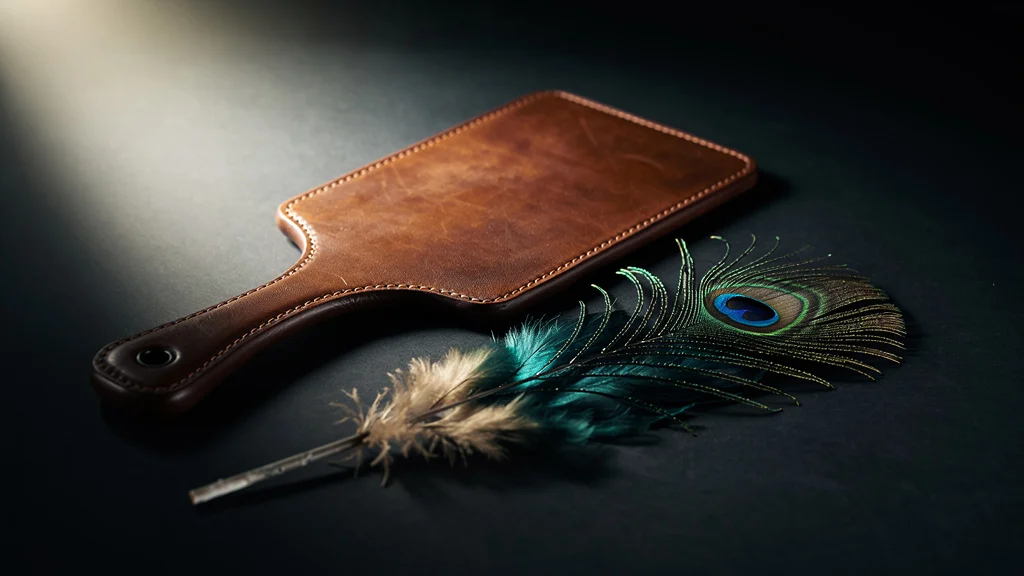
Leather straps or paddles designed for impact play. Short Explanation: "Receiving" means you are struck with slappers or straps; "Giving" means you apply them to your partner.
Give vs Receive
| Role | What it means for Slappers / Straps activity |
|---|---|
| Receiving | you are struck with slappers or straps |
| Giving | you apply them to your partner |
Read the full Yes/No/Maybe list guide or browse all activities.
Interested in exploring Slappers / Straps with your partner?
Start Your ChecklistSlappers and straps represent some of the most versatile and accessible impact play implements available to BDSM practitioners. These broad, flat instruments deliver sensation that ranges from gentle warmth to intense sting, making them excellent choices for both newcomers exploring impact play and experienced players seeking varied sensations. Unlike single-point implements, slappers and straps distribute force across a wider surface area, creating a distinctive feeling that many describe as satisfying thud with sharp surface sting.
In this comprehensive guide, you'll discover the different types of slappers and straps, proper techniques for safe and effective use, essential safety considerations, and how to communicate with your partner about incorporating these implements into your dynamic. Whether you're building your first toy collection or expanding your existing repertoire, understanding these implements enhances both the giving and receiving experience.
The appeal of slappers and straps lies in their simplicity and effectiveness. They require no complex skills to use safely, produce visually satisfying results, and offer a tactile feedback loop that many dominants find rewarding. For submissives, these implements provide clear, definable sensation that's often easier to process than more intense implements.
How Slappers and Straps Work
Slappers and straps function through the physics of distributed impact. When swung, the flexible material accelerates toward the target, and upon contact, the kinetic energy transfers across the implement's surface area. This distribution creates the characteristic combination of thud (deeper tissue impact) and sting (surface sensation) that defines these implements.
Types of Slappers and Straps
Leather slappers typically feature two or more layers of leather joined at a handle, creating a distinctive clapping sound and enhanced impact. The layers can trap air between them, adding to the sensation. Single-layer straps offer more sting and less thud, with sensation varying based on thickness and flexibility. Rubber or silicone straps deliver intense sting with minimal warm-up and are waterproof, making them useful for shower play. Looped straps create a folded design that intensifies impact while maintaining control.
Techniques and Variations
Effective strap work begins with proper grip—hold the handle firmly but not tensely, allowing your wrist natural movement. Start with slow, deliberate swings to gauge distance and impact before increasing intensity. The figure-eight pattern alternates between both buttocks in a flowing motion. Stacking involves repeated strikes to the same area, building intensity gradually. Wrapping occurs when the tip of a strap curves around the target area—generally considered undesirable as it creates unpredictable intense sensation at the tip.
Target Areas
The buttocks remain the primary target for strap play, offering substantial padding and muscle mass. The upper thighs provide similar protection, though many find them more sensitive. Some practitioners enjoy chest and upper back work, though these areas require more careful attention to anatomy. Areas over bone, joints, the spine, kidneys, and neck should always be avoided.
Safety Considerations
Safe strap and slapper play requires understanding both the implements and human anatomy. These considerations protect both partners and ensure experiences remain positive and consensual.
Physical Safety
Always warm up the target area before using slappers or straps at full intensity. Begin with hands or lighter implements to increase blood flow to the surface and prepare tissues. Check your implements before each use for cracks, rough edges, or deteriorating stitching that could cause unintended injury. Maintain awareness of wrap—the strap's tendency to curve around the body where tips can cause more damage than intended. Practice your swing on a pillow to develop consistent aim.
Know the anatomy beneath your target. The buttocks provide excellent padding, but avoid the tailbone and hip bones. On thighs, stay away from the inner thigh where blood vessels and nerves are more vulnerable. Never strike over the spine, kidneys, joints, or anywhere on the face or neck.
Emotional Safety
Impact play can trigger unexpected emotional responses. Establish clear safewords before beginning and check in regularly, especially when playing with new implements or partners. Some recipients experience "drop" after intense impact sessions—be prepared with aftercare supplies including blankets, water, snacks, and emotional availability.
The power dynamic inherent in using implements deserves conscious attention. Discuss expectations about intensity levels, duration, and the emotional context of the scene beforehand. Some people enjoy disciplinary framing while others prefer purely sensational contexts.
Red Flags to Watch For
Stop immediately if you observe: bruising that appears during play (some bruising appearing later is normal), breaking of the skin, recipient becoming non-responsive or dissociative, any numbness or tingling reported by the recipient, or if strikes are landing on unintended areas. Never play when either partner is impaired by alcohol or drugs.
Beginner's Guide to Slappers and Straps
Starting with slappers and straps offers an accessible entry point into impact play. Begin by selecting an appropriate implement—for beginners, a medium-weight leather slapper or strap approximately 12-18 inches long provides good control and moderate sensation.
Step 1: Familiarize yourself with the implement. Handle it, swing it in the air, note its weight and flexibility. Practice on a pillow to understand how it moves and sounds.
Step 2: Start with the recipient. Have your partner positioned comfortably—over pillows on a bed, bent over furniture, or standing with support. Ensure they're warm and relaxed.
Step 3: Begin with hand warm-up. Use your hand to deliver gradual spanking, increasing blood flow to the surface. This prepares the skin and gives both partners time to settle into the scene.
Step 4: Introduce the implement slowly. Start with light taps, focusing on aim and consistency rather than intensity. Gradually increase force as the recipient acclimates and provides feedback.
Step 5: Maintain communication. Check in verbally or through agreed signals. Watch body language for signs of distress or pleasure. Adjust your technique based on responses.
Step 6: Aftercare. When the scene concludes, provide physical and emotional care. This might include lotion for the impacted areas, water, snacks, blankets, and quiet connection time.
Discussing Slappers and Straps with Your Partner
Opening conversation about impact implements works best when approached with curiosity rather than pressure. Choose a neutral time—not in the heat of a moment—to discuss interests. You might begin by sharing something you've read or watched that sparked your curiosity.
Use specific language when discussing interests. Rather than "I want to try impact play," try "I'm curious about how it would feel to receive/give sensation with a leather strap. What do you think about exploring that together?" This specificity helps partners understand exactly what you're proposing.
Discuss boundaries explicitly. Questions to address include: What areas are you comfortable with being struck? What intensity level appeals to you? Do you prefer a sensual or disciplinary context? What safeword system should we use? What does aftercare look like for you?
Consider using a yes/no/maybe list that includes specific implements and techniques. This provides structure for potentially awkward conversations and ensures both partners have opportunities to express preferences and limits.
Frequently Asked Questions
What's the difference between a slapper and a strap?
Slappers typically feature two or more layers of material that create a clapping effect on impact, producing more sound and a distinctive sensation. Straps are usually single pieces of material that offer more direct impact with varying degrees of sting depending on their thickness and flexibility.
How do I prevent wrapping when using a strap?
Wrapping occurs when the tip of the strap curves around the target area. Prevent it by aiming for the center of the target area, using shorter straps until your aim improves, positioning the recipient so target areas are fully accessible, and practicing your swing distance on a pillow first.
What materials are best for beginners?
Leather offers the most forgiving learning curve—it provides clear feedback, can be used at various intensities, and develops a pleasing patina over time. Suede is gentler still. Avoid rubber or silicone until you've developed good control, as these materials deliver more intense sting with less margin for error.
How should I care for leather slappers and straps?
Clean leather implements with a damp cloth after use and allow them to air dry. Apply leather conditioner periodically to prevent cracking. Store flat or hanging rather than coiled to prevent warping. Never share implements between partners without proper sanitization, and note that leather cannot be fully sterilized.
Is it normal for impact play to leave marks?
Yes, temporary redness and even some bruising can be normal with impact play, though this varies significantly between individuals. Discuss expectations about marks beforehand. If marks are unwanted, use lighter intensity and avoid repeated strikes to the same area. Bruises that appear during the scene (rather than hours later) indicate you should stop and reduce intensity.
🛒 Recommended Gear
Note: Links below are affiliate links. We may earn a commission at no extra cost to you.
Discover What You Both Desire
Create your personal checklist and compare with your partner to find activities you'll both enjoy exploring together.
Get Started FreeNo credit card required