Spanking - Leather slappers
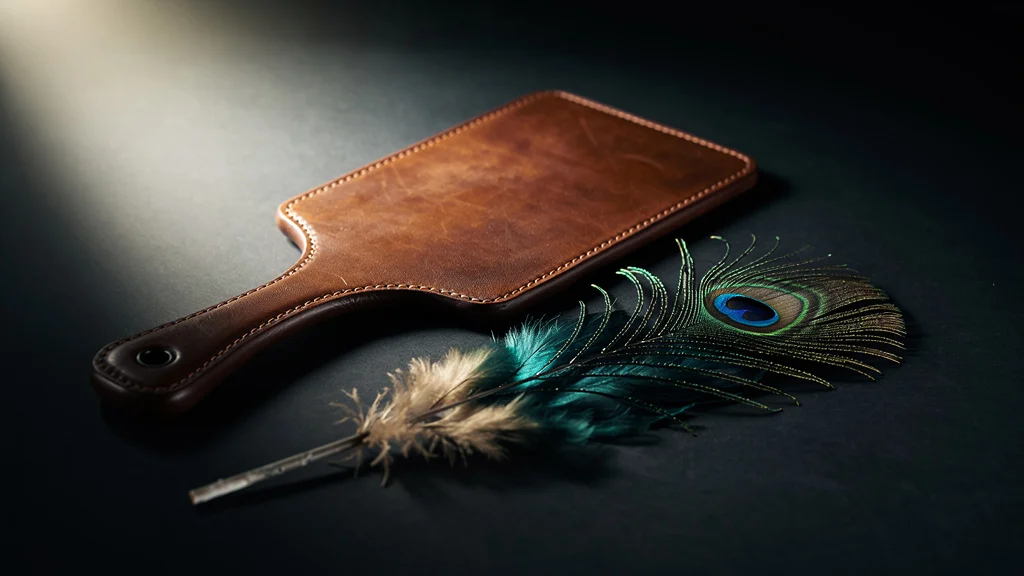
Specialized leather paddles designed for sharp impact and sound effects. Short Explanation: "Receiving" means you are struck with leather slappers; "Giving" means you use them for impact.
Give vs Receive
| Role | What it means for Spanking - Leather slappers activity |
|---|---|
| Receiving | you are struck with leather slappers |
| Giving | you use them for impact |
Read the full Yes/No/Maybe list guide or browse all activities.
Interested in exploring Spanking - Leather slappers with your partner?
Start Your ChecklistLeather slappers occupy a sweet spot in the impact play implement spectrum, offering more intensity than a hand while remaining considerably gentler than rigid paddles or concentrated implements like canes. These flexible leather paddles—typically consisting of two or more leather layers connected at the handle—produce a distinctive slapping sound and satisfying sting that has made them favorites among both beginners and experienced practitioners seeking versatile, moderate-intensity impact options.
The appeal of leather slappers stems from their unique construction. When the flexible leather layers strike a surface, they separate momentarily before reconnecting, creating the characteristic "slap" sound that gives these implements their name. This design produces a stingier surface sensation than thuddy rigid paddles while spreading impact across a moderate area rather than concentrating it like straps or crops. The result is versatile sensation that works for warm-up, main event, or anything in between.
In this comprehensive guide, you'll discover what makes leather slappers effective for impact play, learn techniques for various effects, understand important safety considerations, and find guidance for incorporating these implements into your practice. Whether you're looking for your first impact implement or expanding an existing collection, leather slappers offer rewarding options worth exploring.
How Leather Slappers Work
Understanding leather slapper construction and mechanics helps practitioners choose appropriate implements and use them effectively for desired results.
Construction and Types
Traditional leather slappers consist of two pieces of leather attached at a handle, free to separate at the business end. When swung, the pieces travel together until impact, where they separate and reconnect rapidly, multiplying the slapping effect. Some designs incorporate three or more layers for different sensations; others add split ends or shaped tips for visual appeal and varied impact characteristics.
Leather quality significantly affects performance. Full-grain leather provides durability, develops attractive patina over time, and delivers consistent sensation. Bonded or faux leather may work for occasional use but degrades faster and lacks the supple flex of quality material. Handle construction matters too—well-attached handles prevent loosening under repeated impact, and comfortable grips reduce giver fatigue during extended sessions.
Size variations serve different purposes. Smaller slappers (8-10 inches) offer precision and portability; medium slappers (12-15 inches) provide the most versatility; larger slappers (18+ inches) deliver broader coverage and more dramatic presentation. Width typically ranges from 2-4 inches, with wider faces spreading sensation and narrower faces concentrating it.
Technique and Application
Effective leather slapper use relies on wrist action rather than arm swing. The implement's flexibility and lightweight construction mean that small, controlled movements generate satisfying impact—large windups sacrifice accuracy without proportionate sensation increase. Grip the handle firmly but without excessive tension, allowing natural wrist flex on contact.
Striking angle affects sensation significantly. Perpendicular strikes land the full slapper face flush against the target, maximizing the characteristic slapping sound and spreading sensation evenly. Angled strikes create more wrap-around effect and concentrate force toward the slapper's edges—sometimes desirable for intensity variation, but requiring careful attention to prevent edges striking sensitive areas.
Speed and rhythm create different experiences. Rapid-fire strokes build heat quickly and can overwhelm processing capacity; measured pacing allows receivers to feel each strike distinctly and integrates sensation into overall experience. Most sessions benefit from rhythm variation—perhaps steady warming giving way to unpredictable timing as intensity builds.
Sensation Characteristics
Leather slappers produce what practitioners describe as "stingy-thuddy"—more surface sting than heavy paddles but more depth than whippy implements like crops. The distinctive sound adds psychological dimension; many receivers respond to auditory feedback almost as much as physical sensation. Well-made slappers produce clean, satisfying sounds that enhance the overall experience for both partners.
Compared to other implements, leather slappers sit in the moderate intensity range. They're more serious than hand spanking, gentler than rigid wooden paddles, less concentrated than crops or canes, and more controlled than floggers. This middle-ground positioning makes them excellent all-purpose implements that can serve multiple roles within sessions.
Safety Considerations
Leather slappers are relatively forgiving implements, but proper attention to safety ensures positive experiences and prevents avoidable problems.
Physical Safety
Target the buttocks' fleshy center, avoiding the tailbone, hip bones, lower back (kidney area), and upper thighs unless intentionally targeting those areas at reduced intensity. Leather slappers' moderate size makes targeting easier than with floggers but still requires attention—especially when receivers move during scenes.
Watch for wrap-around, where the slapper's end curves around the buttock to strike the hip or side. This concentrates force on a narrow edge landing on sensitive tissue and can cause unexpected pain or marks. Prevent wrap-around by controlling stroke arc and staying perpendicular to the target surface. If wrap-around occurs, adjust your distance and angle.
Inspect implements before each use. Check that handles remain firmly attached, leather shows no cracks or deterioration, and no sharp edges have developed. Leather conditioner applied occasionally keeps implements supple and extends their lifespan, but ensure any product has fully absorbed before use—greasy implements slip and perform inconsistently.
Intensity Management
Even experienced practitioners should test new slappers on their own thigh before using them on partners. Implements vary significantly despite similar appearance—construction details affect delivered sensation in ways visual inspection cannot reveal. This testing calibrates your expectations and reveals any quality issues.
Warm-up remains important even with moderate implements. Five to ten minutes of hand spanking or very light slapper strokes prepares tissue for increased intensity and allows receivers to settle into receiving headspace. Cold starts feel harsher than warmed skin at identical force levels.
Color monitoring provides useful feedback. Even pink coloration suggests appropriate intensity; blotchy or mottled coloring may indicate uneven technique or edges catching. Skin that remains white after strikes (lack of blood flow) followed by quick reddening might indicate strokes landing too heavily. Adjust based on visual feedback combined with receiver communication.
Communication
Establish clear safewords before beginning and honor them immediately when invoked. Check in verbally during sessions, especially when exploring new intensity levels or during position changes that alter targeting dynamics. Many receivers find it difficult to assess their own state accurately during intense scenes—proactive check-ins catch situations where safewords haven't been used but adjustment is warranted.
Beginner's Guide to Leather Slappers
Leather slappers make excellent first implements for practitioners ready to move beyond hand spanking, offering easier control and more forgiving characteristics than many alternatives.
Choose an appropriate starter slapper: For first implements, select medium-sized slappers (12-15 inches) with standard two-layer construction in moderate width (2-3 inches). Avoid very small or very large options, split-end designs, or unusually heavy or light constructions. Quality materials matter—genuine leather from reputable vendors performs more predictably than bargain alternatives.
Test before use: Strike your own thigh at various intensities before using a new slapper on a partner. This reveals the implement's actual sensation profile, which may differ from expectations. Notice how wrist action translates to impact and what intensity range feels controllable.
Start with thorough warm-up: Begin sessions with hand spanking, transitioning to very light slapper strokes before building intensity. Even if the receiver asks for harder impact immediately, warming the tissue produces better sensation and safer experiences. Impatience at the start often leads to premature session endings.
Focus on accuracy: Controlled technique matters more than intensity. Practice landing strokes exactly where intended, maintaining perpendicular angle, and preventing wrap-around. Consistency makes sessions feel polished and professional; erratic targeting feels incompetent regardless of intensity.
Communicate actively: Ask for feedback frequently, especially early in sessions or when exploring new intensity levels. "How does that feel?" "Would you like more?" "Where would you like me to focus?" Receivers should feel encouraged to provide both positive feedback and requests for adjustment.
Plan for aftercare: Have water, lotion (for after cooling), and comfort items available. Even moderate slapper sessions may leave receivers emotionally open or physically tender. Time for closeness and checking in solidifies positive associations and prepares the foundation for future exploration.
Discussing Leather Slappers with Your Partner
Introducing implements into spanking play represents an escalation that deserves clear communication and mutual agreement.
If you're already practicing hand spanking, the implements conversation flows naturally from discussing variety and sensation exploration. You might express curiosity about trying implements, explain what draws you to leather slappers specifically (their versatility, the sound, the aesthetic), and explore your partner's interest. Sharing educational resources like this article helps partners understand what's being proposed.
For partners hesitant about implements, acknowledge that escalation requires trust and willingness. Implements can feel more serious or intimidating than hands alone. Reassure them that you're interested in their experience and comfort, not just in using new toys. Suggest starting very light—almost certainly lighter than what you'd ultimately enjoy—to build familiarity and confidence.
Discuss purchasing together if possible. Browsing online shops, reading reviews, and choosing implements jointly turns acquisition into shared anticipation rather than one partner presenting another with a fait accompli. Joint selection also ensures the receiver has input into what will be used on their body.
After initial experiences with slappers, debrief thoroughly. What did each partner enjoy? What felt like too much? How did slapper sensation compare to hand spanking? How do you each feel about incorporating slappers regularly? This feedback shapes future sessions and maintains the ongoing consent that keeps impact play positive for everyone involved.
Frequently Asked Questions
What's the difference between a leather slapper and a leather paddle?
The key distinction is flexibility. Leather slappers consist of multiple leather layers free at the striking end, which separate and reconnect on impact to create the signature slapping effect. Leather paddles typically have a single rigid or semi-rigid face backed by stiffening material. Slappers tend to be stingier and more moderate; paddles deliver deeper thud. Both have their places in impact play; slappers often work better for warm-up and moderate scenes, paddles for heavier impact.
How do I care for leather slappers?
Clean leather slappers with a damp cloth after use, allowing them to dry completely before storage. Apply leather conditioner occasionally (every few months with regular use) to maintain suppleness and prevent cracking. Store flat or hanging—avoid folding or crushing that could create permanent creases. Keep away from extreme heat or humidity. Well-maintained quality leather implements last many years.
Are leather slappers suitable for beginners?
Yes—leather slappers are among the best first implements for those ready to move beyond hand spanking. Their moderate intensity, forgiving flexibility, and easy control make them more approachable than rigid paddles or concentrated implements. The main requirement is basic spanking competence; if you're comfortable with hand spanking technique and communication, transitioning to leather slappers is relatively straightforward.
How intense are leather slappers compared to other implements?
Leather slappers sit in the moderate range—more intense than hand spanking, less intense than rigid paddles or canes. Their stingy-thuddy character delivers satisfying sensation without the extremes that some implements produce. This makes them versatile: appropriate for entire sessions at moderate levels, useful as warm-up for heavier implements, or effective as cool-down after intense impact.
Can leather slappers leave marks?
Like most impact implements, leather slappers can leave marks depending on intensity. Light to moderate use typically produces temporary redness lasting minutes to hours. More intense use may cause marks lasting a day or two, and heavy use can produce bruising lasting several days. Leather slappers are less likely to leave dramatic marks than rigid implements or those with edges, but any impact play can potentially mark depending on individual sensitivity and applied force.
🛒 Recommended Gear
Note: Links below are affiliate links. We may earn a commission at no extra cost to you.
Discover What You Both Desire
Create your personal checklist and compare with your partner to find activities you'll both enjoy exploring together.
Get Started FreeNo credit card required