Strapping - Full body beating
Using straps or belts for widespread impact across the body. Short Explanation: "Receiving" means your body is beaten with straps; "Giving" means you use them for full body impact.
Give vs Receive
| Role | What it means for Strapping - Full body beating activity |
|---|---|
| Receiving | your body is beaten with straps |
| Giving | you use them for full body impact |
Read the full Yes/No/Maybe list guide or browse all activities.
Interested in exploring Strapping - Full body beating with your partner?
Start Your ChecklistFull body strapping represents one of impact play's most intense and comprehensive experiences. Rather than targeting a single area like the buttocks or thighs, full body beating involves systematic impact across multiple body surfaces—back, buttocks, thighs, shoulders, and potentially other areas—creating an immersive, overwhelming sensory experience.
This practice demands significant skill, anatomical knowledge, and communication from the top, plus physical and mental preparation from the bottom. The experience offers profound surrender, endorphin release, and for many practitioners, a form of catharsis that lighter or more localized impact play cannot achieve.
This guide covers the techniques, safety protocols, equipment considerations, and preparation required for full body strapping. Whether you're working toward this level of intensity or already practicing it and seeking refinement, understanding both the physical mechanics and psychological dimensions enables safer, more satisfying experiences.
How Full Body Strapping Works
Full body strapping involves using a strap—typically leather, rubber, or heavy fabric—to deliver impact across multiple body areas in a single session. The top systematically works across safe zones, varying intensity and rhythm to create waves of sensation that build throughout the scene. Unlike targeted spanking, full body work creates a comprehensive physical experience.
Techniques and Variations
Systematic progression typically starts with less sensitive areas (upper back, buttocks) with lighter strikes to warm the body before moving to other zones and increasing intensity. This warm-up isn't optional—it prepares tissue, releases initial endorphins, and helps the bottom acclimate psychologically.
Body zones for strapping include: upper back (avoiding spine), lower back (above kidneys), buttocks (classic target, high fat padding), thighs (back and outer surfaces), shoulders, and for advanced play with proper technique, chest and arms. Each zone has different sensitivity, padding, and risk factors.
Rhythm and pacing variations include: consistent rhythmic strokes that allow the bottom to enter trance-like states, unpredictable timing that keeps the bottom alert and present, building sequences that escalate intensity, and intervals with gentler touching between impact periods.
Position variations affect which body areas are accessible: lying face-down exposes back and buttocks; bent over furniture provides buttocks and thighs; standing with arms raised offers sides and back; secured to a frame enables comprehensive access. Position also affects the bottom's physical strain—extended standing or stress positions compound the challenge.
Equipment and Tools
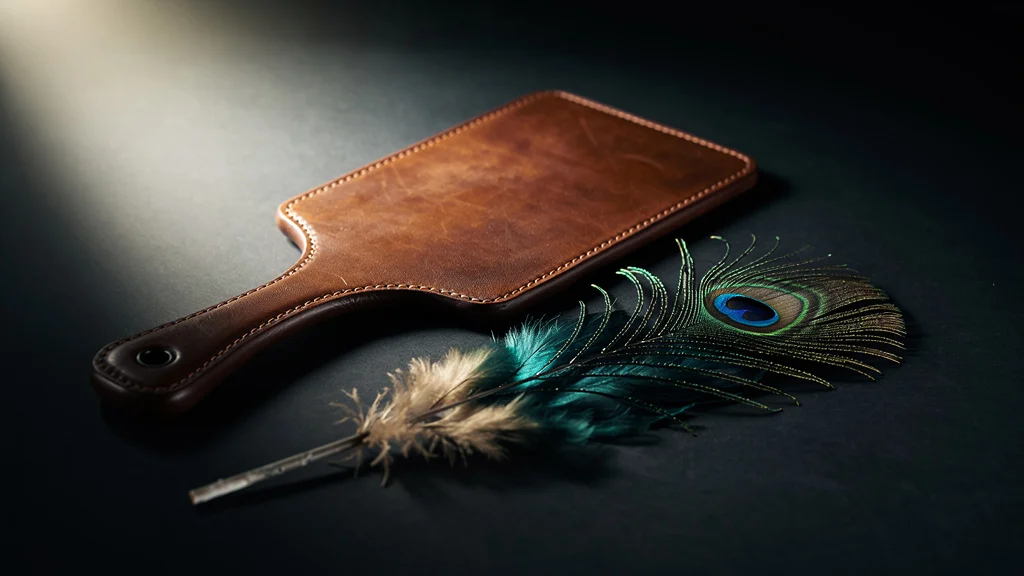
Straps for full body work are typically heavier and more serious than light discipline implements. Leather straps (single or split "tawse" style) deliver thuddy impact with potential for sting depending on thickness and leather type. Rubber straps provide intense sting and are less forgiving than leather. Heavy fabric or nylon straps offer controllable, consistent impact.
Strap dimensions matter: wider straps spread impact over more surface area (generally thuddier, safer for body work); narrow straps concentrate force (stingier, more marking potential, requires more precision). Length affects swing dynamics—longer straps build more momentum but require more skill to control.
Multiple implements allow variety: different straps for different body areas, alternating between implements for varied sensation, having softer options available if the bottom reaches their limit for intense impact but wants to continue lighter play.
Support equipment includes: bondage or positioning furniture to hold the bottom in accessible positions, padding for knees if kneeling, and a comfortable surface for recovery afterward.
Safety Considerations
Full body strapping carries significant risks that require thorough understanding and careful management. The comprehensive nature means more can go wrong, and mistakes affect multiple body systems.
Physical Safety
Anatomical danger zones must be avoided: spine (risk of vertebral damage), kidneys (lower back sides—serious organ injury risk), tailbone, front of throat, face, joints (knees, elbows, ankles), and genitals (unless specifically negotiated with extreme care). Strike only padded muscle and fat areas.
Skin integrity requires monitoring. Watch for color changes indicating damage: light pink is normal; deep red suggests approaching limits; broken skin or welts that split require stopping. Some bottoms have skin that marks easily; others can take more without visible damage. Adjust based on the specific person's responses, not assumptions.
Cumulative stress from extended full body work affects the body systemically. Monitor for: disorientation beyond normal subspace, excessive sweating or pallor, complaints of nausea, inability to respond coherently to check-ins. These suggest the bottom is approaching or exceeding their physiological limits.
Positioning safety matters for extended scenes. Standing for long periods causes circulation issues and fainting risk. Bondage must not restrict breathing or circulation. Check hands and feet for color changes if restrained. Ensure the bottom can signal distress even if verbally incoherent.
Emotional Safety
Full body strapping can trigger intense emotional responses—tears, laughter, anger, profound release. These are often cathartic and positive, but can become overwhelming. The top must distinguish between healthy emotional processing and genuine distress requiring intervention.
Establish safewords that work when the bottom may be non-verbal. Physical signals (dropping a held object, specific hand gestures) provide backup communication. Check in verbally during natural pauses: "Color?" requires minimal coherent response and maintains connection.
Aftercare requirements for full body work are typically extensive. Physical care (warmth, hydration, gentle touch, treating marks) combines with emotional support (verbal reassurance, presence, processing time). Don't rush this phase—adequate aftercare prevents negative psychological aftereffects.
Red Flags
Stop immediately for: any impact to danger zones, broken skin or unintended bleeding, loss of consciousness or inability to respond, panic that doesn't respond to reassurance, or requests to stop. When in doubt, end the scene—you can always play again, but you can't undo injury.
Beginner's Guide
Full body strapping isn't beginner territory. Build up to it through progressive experience: start with light spanking on buttocks only, develop to heavier spanking, add other implements, expand target areas gradually, increase intensity over many sessions. Jumping to full body work without this foundation endangers the bottom and provides a poor experience for both partners.
Tops should practice technique extensively before delivering full body sessions. Practice on cushions or yourself (where reachable) to understand how straps land, how swing affects impact, and how different techniques feel. Attend workshops or learn from experienced practitioners if possible. The top's competence directly determines safety.
Bottoms should know their limits from prior experience with impact play. Can you take extended scenes? How does your body process cumulative impact? What helps you stay in positive headspace versus what pushes you into bad places? This self-knowledge enables clearer communication and safer experiences.
First full body sessions should be conservative: lighter intensity than either partner thinks possible, more check-ins than seem necessary, stopping before reaching maximum tolerance. These cautious first experiences provide data for subsequent sessions and build trust between partners.
Establish comprehensive negotiation beforehand: target areas (including absolute no-go zones), intensity range, duration expectations, safeword and backup signals, aftercare plan, and contingency plans if something goes wrong. Don't rely on in-the-moment decisions for important safety parameters.
Discussing with Your Partner
Full body strapping conversations require more depth than lighter play. The top needs to understand: the bottom's experience level, physical considerations (old injuries, sensitive areas, pain conditions), psychological triggers to avoid, and what the bottom hopes to experience. The bottom needs confidence in the top's skill, anatomical knowledge, and ability to read their responses.
Discuss the specific experience you're seeking. Full body work can be: athletic and energetic, meditative and rhythmic, punishing and disciplinary, intimate and connected, or purely sensation-focused. These different intentions create different scenes—ensure you're planning the same experience.
Address physical limitations honestly. Past injuries, chronic conditions, cardiovascular health, and general physical fitness all affect safety parameters. The bottom might feel embarrassed discussing health issues, but incomplete information endangers them. Create space for honest disclosure.
Plan logistics: space requirements (full body work needs room for the top to move), noise considerations, timing (avoid rushed sessions), and what happens afterward. Will you need to be functional that evening or can you recover? Is there space and time for proper aftercare?
Debrief thoroughly after sessions. What worked? What was too much or not enough? Were there moments of concern? How did the top's technique feel? This ongoing communication improves future sessions and catches problems before they become patterns.
Frequently Asked Questions
How long should a full body strapping session last?
Duration varies enormously based on experience, intensity, and individual tolerance. Early sessions might be 15-20 minutes of actual impact; experienced pairs might extend to an hour or more. Quality matters more than duration—a well-executed shorter session beats an extended scene where either partner loses focus. Build duration gradually over many sessions.
How do I know if I'm causing damage?
Watch skin carefully: light pink is normal; deep red indicates significant impact; broken skin or blood requires stopping. Monitor the bottom's responses: involuntary flinching away (versus controlled acceptance), screaming versus moaning, inability to respond to check-ins. Trust gut feelings—if something seems wrong, stop and assess. Marks that last more than a few days suggest you exceeded safe intensity.
Is full body strapping safe for people with chronic pain conditions?
It depends on the specific condition. Some chronic pain sufferers find impact play helpful—it can trigger endorphin release and provide a different relationship with physical sensation. Others find it exacerbates their condition. Consult healthcare providers familiar with your condition, start very conservatively, and monitor how your body responds over multiple days post-session. Never hide health conditions from play partners.
What's the difference between strapping and flogging for full body work?
Straps deliver more concentrated, percussive impact—thuddy or stingy depending on the strap, but focused. Floggers distribute impact across more surface area through multiple falls, creating broader but often less intense sensation per strike. Many full body sessions combine both implements for variety. Straps require more precision; floggers are more forgiving of aim but require practice for control.
How do I care for marks afterward?
Immediately after: apply arnica gel or cream to reduce bruising. Following days: keep marked areas clean, use gentle moisturizers, avoid tight clothing that rubs. Most marks from consensual impact play heal within a week or two. If marks last longer, break skin, or show signs of infection, seek medical attention. Document healing to understand how your body responds for future sessions.
🛒 Recommended Gear
Note: Links below are affiliate links. We may earn a commission at no extra cost to you.
Discover What You Both Desire
Create your personal checklist and compare with your partner to find activities you'll both enjoy exploring together.
Get Started FreeNo credit card required