Suspension
Being suspended off the ground using ropes, chains, or other restraint devices, requiring careful safety measures. Short Explanation: "Receiving" means you are suspended, while "Giving" means you suspend your partner.
Read the full Yes/No/Maybe list guide or browse all activities.
Interested in exploring Suspension with your partner?
Start Your ChecklistSuspension bondage represents one of BDSM's most dramatic and technically demanding practices—lifting a bound person partially or fully off the ground, creating an experience of weightlessness, vulnerability, and complete surrender. The visual impact is stunning; the psychological effect can be transformative; and the risks require serious knowledge and preparation to manage safely.
For those suspended, the experience often transcends typical bondage. Without ground contact, the body depends entirely on the rigger's skill and the supporting structure. This total reliance creates profound trust dynamics. The unusual sensations—pressure distributions that don't occur on earth, floating feelings, complete inability to affect one's position—can induce powerful altered states.
This guide covers suspension bondage comprehensively: the types and techniques involved, the substantial safety knowledge required, equipment considerations, and the progression from floor-based bondage to airborne work. Suspension is not beginner territory—it requires extensive training, quality equipment, and careful progression. But for those drawn to it, few practices match its intensity and beauty.
How Suspension Works
Suspension uses rope, chains, cuffs, or harnesses attached to overhead anchor points to lift a bound person's body weight. The rigger distributes weight across multiple attachment points, minimizing pressure on any single area while creating the desired position. Lifting may be partial (some body contact with ground remains) or full (completely airborne).
Techniques and Variations
Partial suspension lifts some body weight while maintaining ground contact. This reduces stress on attachment points and provides safety margin—if something fails, the person is already partially supported by the floor. Partial suspension often serves as a stepping stone to full suspension.
Full suspension lifts the entire body. This creates the most dramatic visual and psychological effect but demands the most from equipment, rigging, and the suspended person's body. Every attachment point bears actual load; there's no ground to catch failures.
Position variations include: upright (vertical, face-forward), face-up (horizontal, supine), face-down (horizontal, prone), inverted (head-down), and countless artistic positions combining elements. Each creates different visual effects, sensation experiences, and safety considerations.
Rope suspension (shibari-style) uses carefully tied rope wraps around the body, creating distributed pressure areas connected to suspension lines. The rope work itself is artistic; the suspension showcases it. This requires advanced rope bondage skills plus suspension-specific knowledge.
Harness suspension uses purpose-built suspension harnesses (climbing-style or BDSM-specific) to distribute weight. This is generally safer for beginners as harnesses are designed specifically for body weight bearing, though they offer less artistic flexibility than rope.
Cuff or point suspension hangs from wrist or ankle cuffs. This is generally the riskiest approach—concentrating all weight through small areas—and requires short durations and careful monitoring. It's visually dramatic but demanding on the body.
Equipment and Tools
Overhead structure must be load-rated for suspension. Purpose-built suspension frames are safest. If using building structure, verify it can handle dynamic loads (weight plus movement plus safety margin—typically 10x static body weight minimum). Failure of overhead structure is catastrophic.
Hard points and rigging hardware (carabiners, swivels, rings) must be rated for human suspension. Use climbing-grade or purpose-built BDSM suspension hardware. Never use decorative or craft hardware—they fail under load without warning.
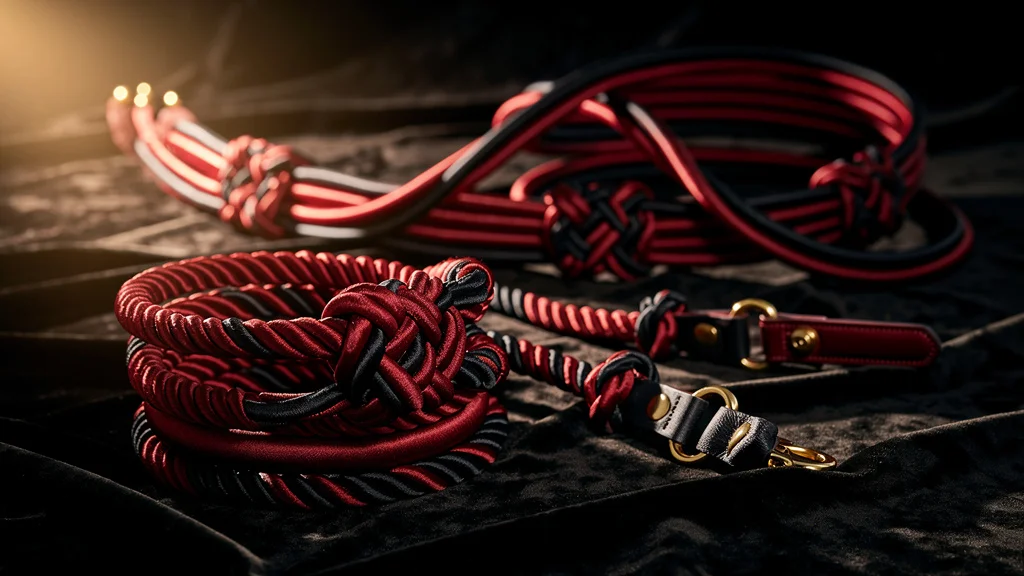
Rope must be appropriate for suspension: strong enough to bear loads, with known breaking strength, in good condition without damage. Natural fiber ropes (hemp, jute) are traditional for shibari suspension; synthetic ropes (nylon) offer higher strength. Rope choice affects both aesthetics and safety.
Emergency tools must be immediately accessible: EMT shears for cutting rope, backup lowering systems, first aid supplies. If something goes wrong in suspension, it goes wrong fast—seconds matter.
Safety Considerations
Suspension carries significant risks that have caused serious injuries and deaths. This is not a practice to approach casually or learn only from online videos. Proper training, quality equipment, and extensive floor-based experience should precede any suspension attempts.
Physical Safety
Nerve damage is the most common suspension injury. Compression of nerves (especially the radial nerve in arms) can cause temporary or permanent damage. Proper weight distribution, time limits, and constant monitoring are essential. Numbness or tingling requires immediate response.
Circulatory issues include blood pooling in inverted positions, pressure points restricting blood flow, and overall cardiovascular stress. Inverted suspension has strict time limits; any position restricting circulation requires close monitoring.
Joint stress occurs when suspension forces joints beyond normal ranges or places unusual stress on ligaments and tendons. Shoulder injuries are particularly common with arm-heavy suspensions.
Falls and equipment failure can cause catastrophic injury. Use equipment rated for purpose, maintain it properly, inspect before each use, and have backup safety systems. Never suspend higher than necessary—a few inches off the ground creates the experience while minimizing fall distance.
Time limits are essential. Most suspension positions become dangerous within 10-20 minutes even with perfect rigging. Inverted positions may have limits of just 2-5 minutes. Know your limits before beginning and track time carefully.
Emotional Safety
Suspension can trigger intense psychological responses: panic when lifted, fear of falling, dissociation from altered sensation, or overwhelming vulnerability. The suspended person has essentially no ability to help themselves—complete dependence on the rigger. Trust must be absolute.
Communication becomes complicated in suspension. The suspended person may be unable to move, may be in unusual orientation, and may be experiencing altered states. Establish clear signals for distress that don't require complex verbalization. Monitor facial expression and body tension throughout.
Aftercare for suspension is typically extensive. Physical recovery (the body has been stressed in unusual ways), emotional processing (the psychological intensity), and practical care (marks, soreness) all require attention.
Red Flags
Immediate lowering required for: any numbness or tingling, skin color changes, breathing difficulty, panic that doesn't respond to reassurance, safeword, equipment sounds suggesting strain, or rigger uncertainty about anything. When in doubt, get them down. You can always try again; you cannot undo nerve damage.
Beginner's Guide
Suspension requires extensive foundation before attempting. If you're interested in suspension, your progression should be:
First: Master floor-based bondage. Spend months or years learning rope bondage without any suspension elements. Understand how rope affects bodies, how to tie securely, how to recognize distress. Most suspension problems stem from inadequate foundational skills.
Second: Seek in-person instruction. Suspension cannot be safely learned from online resources alone. Find experienced riggers willing to mentor, attend workshops, or take classes. Hands-on learning with immediate feedback prevents dangerous mistakes.
Third: Start with partial suspension. Before fully lifting someone, practice transitions where some weight lifts while ground contact remains. Learn how bodies respond to upward force, how your equipment behaves under load, and how to recover from partial suspensions.
Fourth: Progress gradually. Full suspension should only come after demonstrated competence in partial suspension, appropriate equipment, understanding of the specific position being attempted, and clear emergency procedures. Rush this progression at your partner's peril.
Never suspend alone. Having a third person present (or at minimum, a phone within reach of the suspended person) provides crucial backup if the rigger has an emergency.
Discussing with Your Partner
Suspension conversations should address both parties' experience levels. If either partner is new to suspension, acknowledge this and plan accordingly. Experienced partners should still discuss specific techniques and limitations rather than assuming competence transfers across all suspension types.
Discuss physical factors: joint issues, circulatory conditions, claustrophobia, fear of heights, previous bondage injuries. Any of these may affect whether or how suspension is appropriate. Some people should not be suspended; most can with appropriate modifications.
Negotiate specific activities: What positions interest you? What's the goal—aesthetic photography, intense submission experience, challenging endurance? How long do you expect to be suspended? What activities might occur during suspension? Clear expectations prevent mid-scene complications.
Review emergency procedures together. Both partners should understand: how to lower someone quickly, where emergency tools are, what signals indicate distress, and what happens if something goes wrong. This isn't pessimism—it's responsible preparation.
Plan for extensive aftercare. Suspension takes physical and emotional toll. Ensure you have time for recovery, appropriate supplies, and mutual availability for processing afterward.
Frequently Asked Questions
How long can someone safely be suspended?
This varies by position, rigging, individual, and quality of weight distribution. General guidelines: standard positions might be 10-20 minutes maximum; inverted positions typically 2-5 minutes; any position with compression points may be shorter. Always monitor for warning signs rather than relying solely on time limits. When symptoms appear, lower immediately regardless of elapsed time.
What training do I need for suspension?
Extensive floor-based bondage experience (typically years), in-person instruction from experienced suspenders, understanding of anatomy as it relates to compression and nerve paths, rigging and equipment knowledge, and practice with supervised partial suspensions before attempting full suspension. Online videos and tutorials are inadequate preparation—the stakes are too high for self-teaching.
Can any overhead point support suspension?
No. Most residential fixtures (closet rods, decorative hooks, ceiling fans) cannot support human body weight safely. Purpose-built suspension frames are safest. Structural beams may work but require verification. Any overhead point must be rated for dynamic loads—typically 10x body weight minimum to account for movement and safety margin. If unsure, consult a structural professional or use dedicated equipment.
Is suspension safe during pregnancy or with health conditions?
Suspension during pregnancy is generally contraindicated—the physical stresses and risks are inappropriate. Various health conditions (circulatory problems, joint issues, nerve damage history, respiratory conditions, blood pressure issues) may preclude suspension or require significant modifications. Consult healthcare providers familiar with suspension if you have health concerns. Err toward caution.
What's the most common suspension injury?
Nerve compression injuries, particularly to the radial nerve (running along the outer upper arm) and brachial plexus (nerve bundle in shoulder/neck). These can cause numbness, tingling, weakness, or pain that may be temporary or permanent depending on severity. Proper weight distribution, time limits, and immediate response to warning symptoms prevent most nerve injuries. This is why training emphasizes anatomy and monitoring.
🛒 Recommended Gear
Note: Links below are affiliate links. We may earn a commission at no extra cost to you.
Discover What You Both Desire
Create your personal checklist and compare with your partner to find activities you'll both enjoy exploring together.
Get Started FreeNo credit card required