Breast whipping
Whipping the breasts with a whip or other implement. Short Explanation: "Receiving" means your breasts are whipped; "Giving" means you whip your partners breasts.
Give vs Receive
| Role | What it means for Breast whipping activity |
|---|---|
| Receiving | your breasts are whipped |
| Giving | you whip your partners breasts |
Read the full Yes/No/Maybe list guide or browse all activities.
Interested in exploring Breast whipping with your partner?
Start Your ChecklistBreast whipping is a form of impact play where implements like floggers, crops, or similar tools are applied to the breasts. This intense practice combines the sensitivity of breast tissue with the dynamics of impact play, creating experiences that challenge and arouse those drawn to breast torture and pain play.
As one of the more extreme forms of breast play, whipping requires considerable skill, safety awareness, and clear consent. The vulnerability of breast tissue combined with the intensity of impact creates both unique sensation and real risk if performed carelessly.
This guide covers the techniques, safety considerations, and dynamics of breast whipping for couples exploring this practice.
Understanding Breast Whipping
Implements and Their Effects
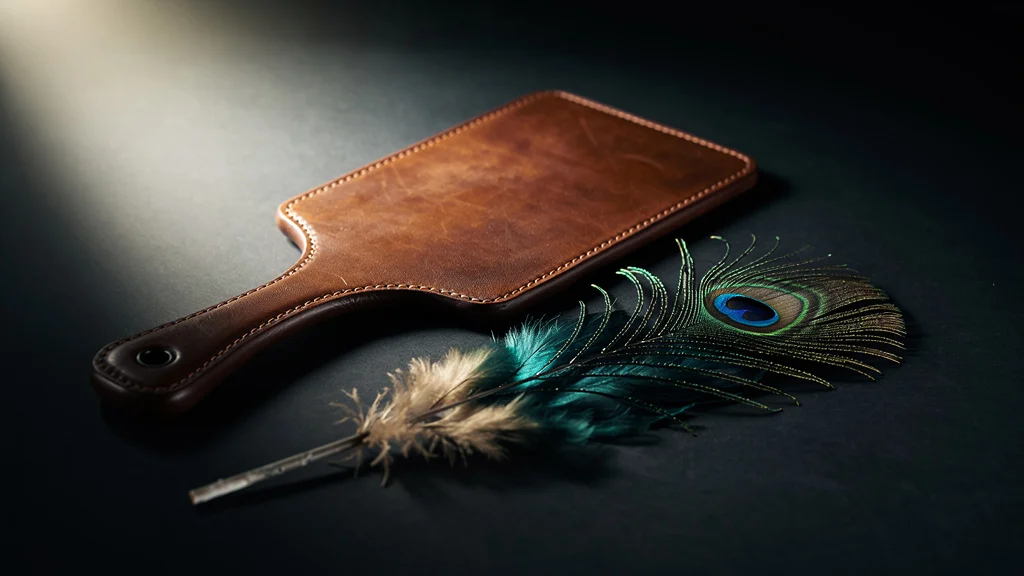
Different implements create different sensations: soft floggers spread impact over larger areas, creating thud with less sting; riding crops deliver focused, stinging impacts; thin canes or switches create intense, sharp sensation in narrow lines. The implement choice significantly affects both sensation and safety considerations.
For breast whipping specifically, wider, softer implements are generally safer than narrow, stiff ones. The tissue sensitivity and the risk of striking unintended areas (ribs, sternum) make control essential.
The Experience
For receivers, breast whipping creates intense, vulnerable sensation—having such sensitive areas deliberately struck. The anticipation, the impact, and the spreading warmth combine with the psychological aspects of exposure and surrender. For givers, the intimacy of being trusted with such vulnerable areas and the power dynamics create their own intensity.
Safety Essentials
Targeting
Acceptable targets include the breast tissue itself and the upper chest below the collarbone. Avoid: nipples (extremely sensitive, easily damaged), sternum, ribs, and any area where bone is close to the surface. Accuracy is essential—practice extensively on pillows or other surfaces before striking a person.
Intensity Control
Breast tissue is more sensitive than buttocks or back—calibrate intensity accordingly. What would be a warm-up strike elsewhere might be too intense on breasts. Start much lighter than you think necessary and build based on feedback. Err significantly on the side of caution.
Warmup
Warm up breast tissue before impact: massage, light slapping with hands, very light flogging. This brings blood to the surface and prepares tissue for more intense sensation. Never begin with full-intensity strikes on cold tissue.
Watching for Damage
Monitor for signs of excessive impact: cuts, excessive bruising, swelling beyond normal response, or pain that seems disproportionate. Stop immediately if anything concerning appears. Deep bruising in breast tissue should be allowed to fully heal before additional impact.
Technique and Dynamics
Positioning
Position the receiving partner for easy access and clear targeting: standing, kneeling, or lying on their back. The giver should have clear sight of targets and room to swing accurately. Secure positioning (bondage or instruction to hold still) ensures the target doesn't move unexpectedly.
Building the Scene
Breast whipping often works best within broader scenes rather than in isolation. Build arousal and headspace before introducing breast impact. Combine with other stimulation—genital touch, nipple play, verbal elements—to create complete experience rather than pure pain focus.
Reading Response
Pay close attention to the receiving partner's responses. Breathing changes, involuntary sounds, body tension, and verbal feedback all communicate about the experience. Adjust intensity, pacing, and targeting based on what you observe, not just on what you want to deliver.
Frequently Asked Questions
What implement is best for beginners?
Soft, multi-strand floggers offer the most forgiving introduction. They distribute impact widely, create thud rather than sting, and are less likely to wrap unexpectedly. Avoid single-strand implements, canes, or anything that concentrates force until significant experience is developed.
How do we know if we've gone too far?
Signs of excessive impact include: cuts or broken skin, bruising that appears immediately (rather than developing over hours), significant swelling, or pain that doesn't subside with aftercare. If these occur, stop immediately and provide appropriate care. Severe symptoms warrant medical attention.
Can breast whipping cause permanent damage?
Careful breast whipping shouldn't cause permanent damage. However, excessive force, poor technique, or ignoring warning signs could potentially cause lasting harm. The key is respecting the tissue's limits, using appropriate implements with proper technique, and prioritizing the receiving partner's wellbeing.
How long should we wait between sessions?
Allow all marking and soreness to fully resolve before additional breast whipping—typically at least a week for moderate sessions, longer for intense ones. Repeated impact on healing tissue increases damage risk. Patience protects against cumulative harm.
🛒 Recommended Gear
Note: Links below are affiliate links. We may earn a commission at no extra cost to you.
Discover What You Both Desire
Create your personal checklist and compare with your partner to find activities you'll both enjoy exploring together.
Get Started FreeNo credit card required